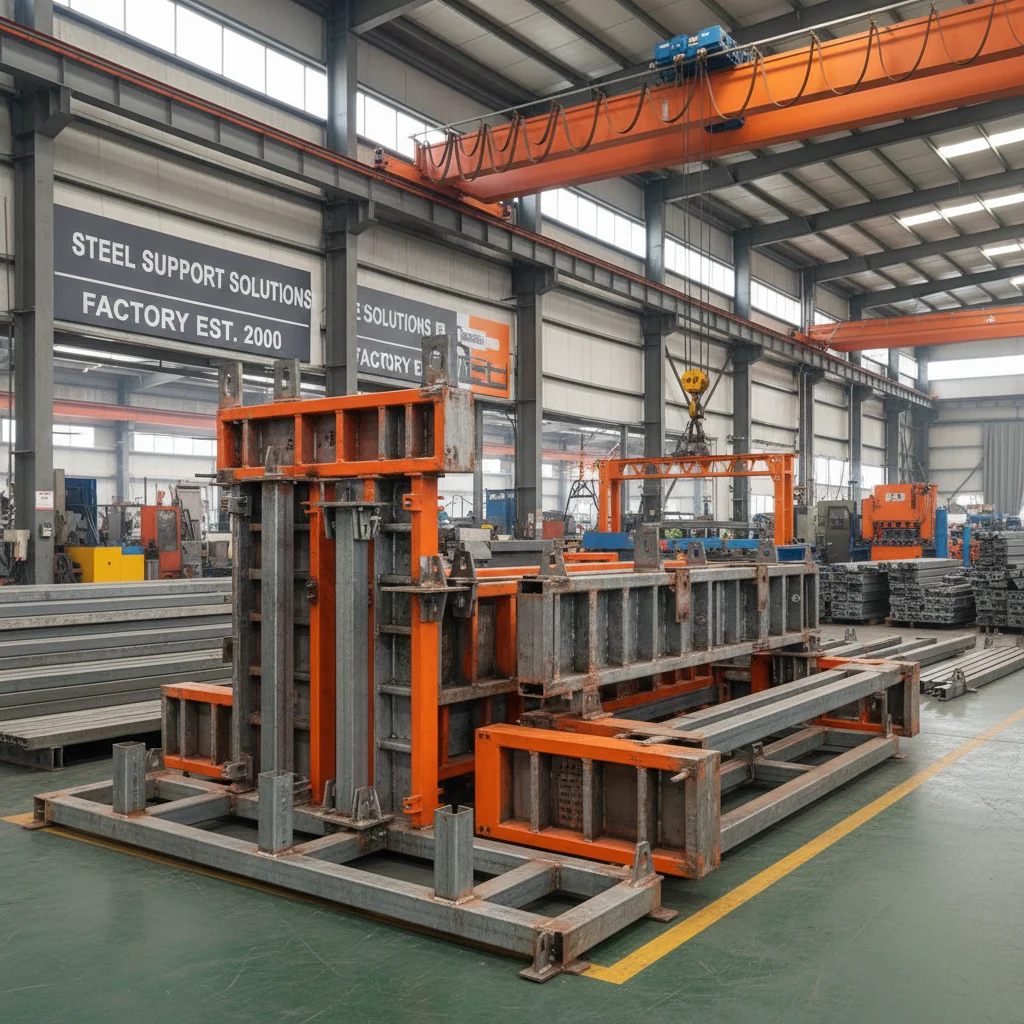
Selecting a reliable steel pipe Factory often becomes the invisible deciding factor in the structural integrity of large-scale construction projects. While the focus usually remains on the final blueprint, the quality of the steel piping and the precision of the supporting accessories determine whether a project meets safety margins or faces costly delays.
The modern construction landscape is shifting toward modularity and rapid assembly. This transition requires a systemic approach to procurement where raw materials—such as high-strength welded pipes—and specialized fastening components are engineered to work in tandem, reducing the reliance on onsite manual adjustments.
To optimize project timelines and safety, engineers are increasingly scrutinizing the synergy between pipe manufacturing and accessory stability. This article examines the critical technical factors in steel pipe production and the evolving role of specialized stabilization tools in modern formwork.


The operation of a specialized steel pipe factory extends beyond simple extrusion or welding; it is an exercise in metallurgy and tolerance management. For structural applications like ringlock or frame scaffolding, the pipe must maintain a consistent wall thickness and a perfectly circular cross-section to ensure that couplers and joints fit securely without inducing structural eccentricity.
Cangzhou Sheen Metal Products Co., Ltd. utilizes automated production lines to mitigate human error in the welding process, ensuring that each pipe meets ISO 9001 and CE standards. This level of precision is critical because even a millimeter of deviation in the pipe diameter can compromise the locking mechanism of an entire scaffolding system.
The core of any architectural support system lies in its ability to resist lateral and vertical pressures without deformation. This begins with the raw material selection, where high-strength carbon steel is treated to optimize its yield point. The manufacturing process must include rigorous testing for weld penetration and surface smoothness to prevent stress concentration points that could lead to fatigue failure over repeated reuse cycles.
Beyond the pipes themselves, the accessories must match the steel grade. For instance, the use of galvanized coatings is not merely for aesthetics but is a technical requirement to prevent oxidation in humid construction environments. This protects the interface between the pipe and the coupler, maintaining the frictional grip necessary for safety.
Integration of ERP-based intelligent management systems allows for end-to-end traceability. From the procurement of the steel coil to the final delivery of the scaffolding tube, every batch is logged, ensuring that the load-bearing capacities claimed in the technical specifications are verifiable and consistent across global projects.
While the steel pipe provides the skeleton, the concrete casting phase introduces a different set of challenges: high lateral pressure. Traditional bolted clamps often struggle with installation speed and the risk of loosening under vibration, which can lead to panel shifting or "bowing" during the pour.
The transition from bolted systems to spring-loaded fastening mechanisms represents a shift toward "active stabilization," where consistent clamping force is maintained automatically regardless of minor panel variations.
Formwork spring clamps address this by using high-strength spring steel to provide a secure, tool-free grip. These components are compatible with various materials including timber, plywood, and hollow PP panels. By eliminating the need for complex tools, they significantly reduce the man-hours required for assembly and disassembly.
The economic impact of adopting tool-free spring clamps is most evident in the labor cost reduction per pouring cycle. In a typical industrial setting, the time spent tightening and loosening bolts across hundreds of panels accumulates into significant overhead. The spring-loaded design allows for rapid attachment, accelerating the entire assembly cycle.
Furthermore, the precision alignment provided by these clamps ensures a smoother surface finish on walls and columns, reducing the amount of post-casting remedial work. This efficiency creates a positive feedback loop: faster installation leads to more pours per month, increasing the overall ROI of the formwork equipment.
In high-density urban projects, such as bridge engineering or municipal infrastructure, space is limited and schedules are rigid. The use of Collapsible Mobile Scaffolds and Ringlock systems allows for agile reconfiguration. When combined with high-precision welded pipes, these systems provide the stability needed for deep excavations and complex tunnel engineering.
A typical scenario involves the casting of heavy-duty support columns where high lateral pressure is expected. By utilizing spring clamps with a clamping range of 10–50 mm, contractors can seamlessly switch between plywood and hollow PP panels, ensuring that the formwork remains locked under pressure, thus minimizing the risk of on-site accidents.
The industry is moving toward a "zero-waste" philosophy, where reusability is the primary metric of value. This is driving the demand for reinforced spring steel and advanced powder coatings that can withstand hundreds of cycles in harsh outdoor environments without losing tension or succumbing to corrosion.
Digital integration is also playing a role. Inventory control systems now track the lifecycle of every component, from the steel props to the screw jacks. By maintaining regular inspection logs for spring tension and jaw deformation, companies can move from reactive replacement to predictive maintenance.
As global engineering projects become more complex, the demand for customized solutions—such as specialized pipe diameters or tailored surface treatments—will grow. The ability of a manufacturer to integrate R&D with rapid production will be the key differentiator in the next decade.
Choosing between different fastening solutions requires a trade-off analysis between initial cost, installation speed, and long-term durability. While bolted clamps may have a lower unit price, the cumulative labor costs often make them more expensive over the project lifecycle.
Technical evaluations should focus on the clamping force consistency and the compatibility of the material with the specific formwork panels being used. High-strength spring steel is generally preferred for projects with tight deadlines and high safety requirements.
The following table provides a qualitative comparison to help project managers evaluate the suitability of different clamping solutions based on operational needs.
| Metric | Bolted Clamps | Spring Clamps | Impact on Project |
|---|---|---|---|
| Assembly Speed | Slow (Tool-reliant) | Ultra-Fast (Tool-free) | Labor Hours |
| Clamping Force | Variable (Manual) | Consistent (Spring) | Structural Integrity |
| Material Wear | Moderate Thread Wear | High Durability Steel | Replacement Cost |
| Panel Fit | Specific Thickness | Multi-Material Fit | Versatility |
| Safety Risk | Loose Bolt Risks | Secure Spring-Lock | On-site Accidents |
| Surface Finish | Potential Misalignment | High Precision | Remedial Work |
Modern spring clamps are engineered for versatility. They are fully compatible with timber, plywood, and hollow PP formwork panels. Because the spring-loaded mechanism can adapt to varying panel thicknesses within its designated range (typically 10–50 mm), they provide a seamless fit across different formwork systems used in walls, slabs, and columns.
Safety is enhanced by providing a consistent and secure grip on panel edges. Unlike bolted clamps, which can loosen due to vibration or improper tightening, the spring-lock ensures that panels remain firmly in place during high-pressure concrete pouring. This prevents panel shifting or sudden collapse, significantly reducing the risk of accidents for site personnel.
Quality is ensured through a combination of automated production, precise metallurgy, and international certifications. Key processes include using high-strength steel, applying anti-corrosion coatings (galvanization or powder coating), and employing rigorous testing for weld integrity and dimensional tolerance to ensure the pipes fit perfectly with couplers and screw jacks.
The primary advantage is the drastic reduction in labor costs. By eliminating the need for manual tools for every single attachment and detachment, the assembly cycle is accelerated. This allows a smaller team to manage a larger volume of formwork, reducing man-hours per pouring cycle and increasing the overall project turnover rate.
Yes. They are manufactured from reinforced high-strength spring steel specifically designed to withstand significant lateral and vertical pressures. The spring mechanism maintains a constant force that prevents the formwork from bowing or shifting even under the weight of heavy concrete pours in modern engineering projects.
To ensure long-term performance, accessories should be regularly cleaned of concrete residue. Maintenance logs should include checks for spring tension, jaw deformation, and the integrity of the anti-rust coating. Any clamp showing significant deformation or loss of tension should be replaced to maintain site safety standards.
The synergy between high-precision steel pipe manufacturing and innovative fastening solutions is what defines the efficiency of modern architectural support. By moving away from labor-intensive traditional methods and embracing tool-free, high-strength components, the construction industry can achieve a safer and more sustainable building process.
As we look toward a future of modular and rapid urban development, the role of a professional steel pipe Factory remains foundational. Investing in certified, durable, and precision-engineered systems is not just a matter of procurement—it is a strategic decision to ensure the long-term viability and safety of global infrastructure.