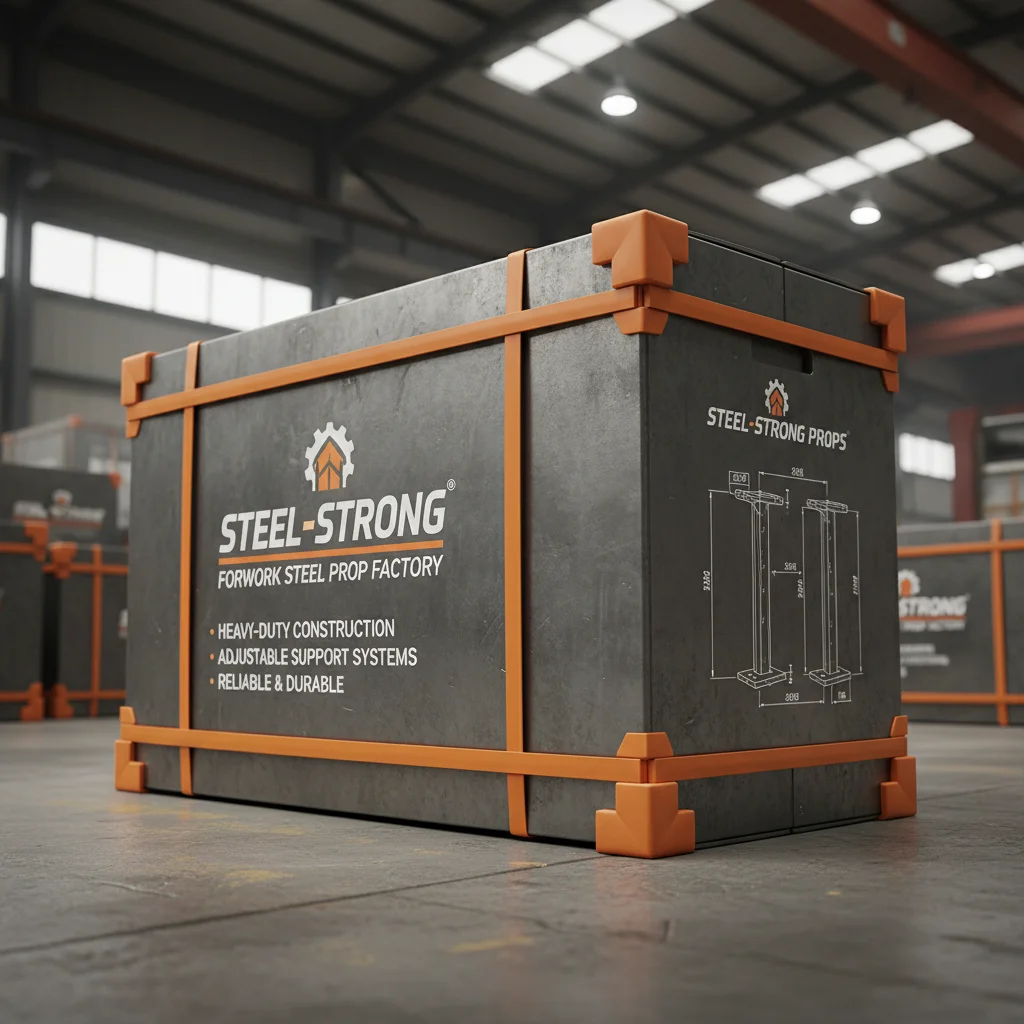
Selecting a reliable post shore Factory is a critical decision for construction firms aiming to balance structural integrity with project timelines in the metal products manufacturing sector. Shoring systems serve as the temporary backbone for concrete formwork, ensuring that vertical loads are supported safely until the structure reaches self-sufficiency. In high-stakes civil engineering, the quality of the factory producing these shores directly impacts on-site safety and operational efficiency.
The primary challenge for procurement managers is identifying a manufacturer that blends high-strength carbon steel production with strict adherence to international safety standards. Inconsistent wall thickness, poor welding quality, or inadequate surface treatment can lead to structural failure or rapid corrosion, significantly increasing the total cost of ownership and posing severe risks to personnel working at height.
This analysis provides a comprehensive framework for evaluating post shore manufacturing capabilities, technical parameters for load-bearing stability, and the strategic criteria needed to select a supplier that ensures long-term durability and compliance for diverse architectural support projects.

Core Manufacturing Capabilities for Shoring Systems

A professional post shore Factory must integrate automated production lines with rigorous testing facilities to ensure every unit maintains consistent structural tolerances. The manufacturing process typically involves precision tube cutting, robotic welding for connectors, and controlled heat treatment to optimize the yield strength of the carbon steel. For high-capacity shores, the alignment of the inner and outer tubes is paramount to prevent buckling under axial compression.
Cangzhou Sheen Metal Products Co., Ltd. employs an ERP-based intelligent management system to track raw material procurement and production stages, ensuring that the steel used meets global industrial requirements. By focusing on "Quality as the Foundation," the factory ensures that the modular components—including steel props and adjustable jacks—interlock seamlessly, reducing assembly errors on construction sites.
Technical Specifications and Load Distribution
The efficiency of a shoring post is defined by its load capacity and adjustability. High-strength carbon steel is the standard material, often paired with galvanized finishes to resist moisture. Technical parameters typically include load capacities ranging from 200kg to several tons per prop, depending on the diameter and wall thickness of the steel tubing. Precision threading on the screw jacks allows for millimetric adjustments to ensure a perfectly level support platform.
To maximize stability, shores must be designed to distribute loads evenly across the formwork. This is achieved through the use of robust base plates and top U-heads, which prevent the shore from sinking into the ground or slipping from the beam. The integration of high-precision welded pipes ensures that the vertical axis remains stable even when supporting heavy concrete pours in multi-story building projects.
Application Scenarios for Industrial Shoring
Post shores are indispensable in various construction and civil engineering contexts. In high-rise building construction, they provide the necessary support for slab formwork, allowing the concrete to cure before the supports are removed. They are also critical in bridge engineering, where temporary supports are required to hold massive girders during the installation of the permanent deck structure.
Beyond new builds, these systems are used in industrial maintenance and renovation. For instance, during the structural reinforcement of old factories or municipal infrastructure, steel props are deployed to stabilize existing ceilings and walls. The versatility of modular systems, such as frame scaffolding and ringlock scaffolding, allows them to be combined with post shores to create complex, multi-level support architectures for deep excavations and tunnel engineering.
Evaluation of Material Durability and Finishes
The operational lifespan of shoring equipment is heavily dependent on the surface treatment applied at the factory. Painted finishes provide a basic barrier against oxidation, while hot-dip galvanization offers superior protection in humid or coastal environments. The choice of finish affects the reusability of the product across multiple project cycles, directly impacting the long-term ROI for the contractor.
The following conceptual index illustrates the relative durability and maintenance requirements of different surface treatments. A higher score in the durability index indicates a longer lifespan under harsh environmental conditions, while the maintenance score reflects the frequency of required inspections and touch-ups.
Strategic Procurement and Supplier Validation
When auditing a post shore Factory, buyers should prioritize certifications such as ISO 9001 and CE, which validate the quality management and safety compliance of the production process. A reliable supplier will provide detailed mill test certificates (MTC) for the steel used, proving that the material's chemical composition and mechanical properties meet the project's engineering requirements.
Beyond certifications, the ability to provide customized solutions is a key differentiator. Whether it is adjusting the height range of the props or providing specialized couplers and accessories, a manufacturer with strong R&D capabilities can optimize the shoring plan to reduce the total number of units needed on site, thereby lowering logistics costs and installation time.
Common Implementation Risks and Mitigations
One of the most frequent risks in shoring is the failure to account for lateral loads, which can cause "side-sway" and lead to sudden collapse. To mitigate this, shores must be braced horizontally and vertically using scaffolding tubes and couplers. Ensuring that the base is set on a stable, non-yielding surface—often using adjustable screw jacks—is essential to prevent uneven settlement.
Another risk is the overloading of individual posts. Site managers must strictly adhere to the load limits specified by the factory. Regular inspections for weld cracks, tube deformation, or stripped threads are mandatory. Replacing damaged components immediately prevents a localized failure from triggering a progressive collapse of the entire support system.
Shoring Solution Comparison Framework
Different project requirements necessitate different types of architectural support. While standard steel props are ideal for simple vertical loads, modular frame systems are better for access and temporary platforms. The following table provides a relative evaluation of common shoring and support approaches based on installation speed, load capacity, and adaptability.
| Solution Type | Installation Speed | Load Capacity | Adaptability |
|---|---|---|---|
| Standard Steel Props | High | Medium | Low |
| Heavy-Duty Post Shores | Medium | High | Medium |
| Frame Scaffolding | High | Medium | High |
| Ringlock Systems | Medium | High | Very High |
| Cuplock Scaffolding | Medium | High | High |
| Tube & Coupler | Low | Custom | Maximum |
The decision should be based on the specific load requirements of the concrete slab and the complexity of the site geometry. For projects requiring rapid deployment and high vertical strength, heavy-duty post shores from a certified factory offer the most efficient balance of cost and safety.
Frequently Asked Questions
Load capacity is primarily determined by the steel grade, the diameter of the tubing, and the wall thickness. Additionally, the length of the shore affects its buckling resistance; the taller the shore, the lower its maximum load capacity unless reinforced.
Painting provides a surface layer of protection that can chip or peel, requiring frequent touch-ups. Hot-dip galvanizing creates a metallurgical bond between the zinc and the steel, offering far superior corrosion resistance, especially in outdoor or marine environments.
Screw jacks allow for precise height adjustments to compensate for uneven ground or to ensure the formwork is perfectly level. They provide the fine-tuning necessary to achieve a tight fit between the shore and the load-bearing surface.
Yes, post shores are often integrated with frame or ringlock scaffolding to provide both structural support for concrete and safe access platforms for workers. This combined approach optimizes site efficiency.
Key warning signs include visible bowing or bending of the tubes, cracked welds at the connection points, stripped threads on adjustable jacks, and excessive corrosion that has reduced the wall thickness of the steel.
Buyers should verify ISO and CE certifications, request material test reports, inspect the factory's quality control processes, and check for a proven track record of supplying large-scale engineering projects globally.
Conclusion
The selection of a post shore Factory involves more than just comparing prices; it requires a deep dive into the manufacturer's technical capabilities, material quality, and commitment to safety standards. By prioritizing high-strength steel, precision engineering, and durable finishes, construction firms can significantly reduce project risk and operational costs while ensuring a safe environment for their workforce.
For organizations evaluating architectural support systems and shoring solutions, detailed technical specifications and compliance data are available at www.sheenmetalscaffold.com to support informed procurement decisions.