
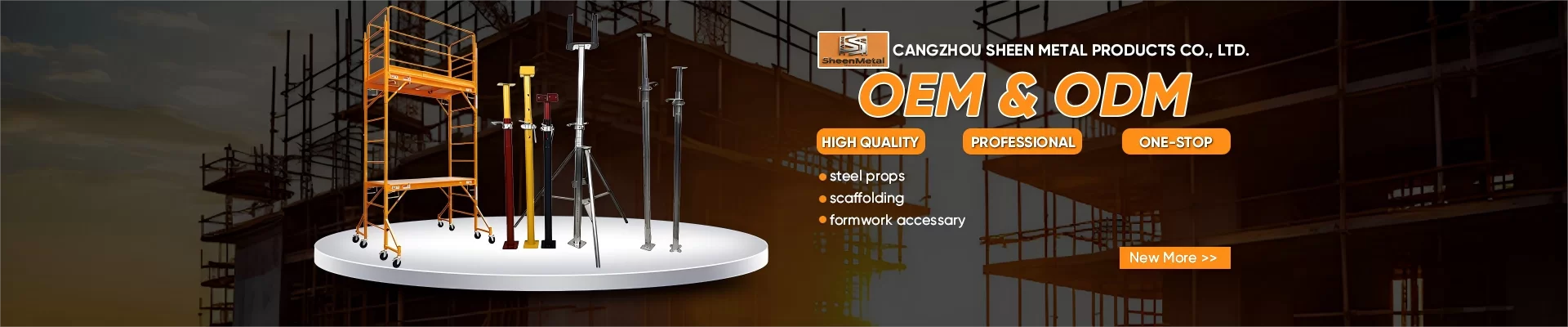
Steel Prop Tripod for Stability from building material Factory
In high-pressure concrete pouring and complex slab formwork operations, lateral stability is the most critical factor for site safety. The Steel Prop Tripod is a professional-grade stabilization accessory engineered to maintain precise vertical alignment of steel props, effectively eliminating the risk of tipping or lateral shifting during the most volatile phases of installation. For contractors and project managers, this component transforms a potentially hazardous setup process into a controlled, secure operation, ensuring that structural integrity is never compromised before the formwork system is fully locked.
By integrating a foldable, three-legged design crafted from industrial-grade Q235 high-strength carbon steel, this tool provides an immediate safety buffer on uneven terrain. Whether supporting H20 beams or standard steel props, the tripod ensures that the vertical load-bearing elements remain exactly where they are engineered to be. For those sourcing from a reliable building material Factory, investing in these stabilization tools is a strategic move to reduce workplace accidents and accelerate deployment speed through self-stabilizing mechanics.

Engineering Precision for Lateral Stability in Modern Shoring Systems
The fundamental challenge in temporary support systems is the "tipping point" encountered before the primary structure is fully secured. The Steel Prop Tripod addresses this by providing a wide base of support that distributes lateral forces evenly. Manufactured from Q235 high-strength carbon steel, the tripod is built to withstand the rigors of heavy-duty construction sites while maintaining the rigidity required to keep props perfectly perpendicular to the ground.
From a technical perspective, the three-legged foldable design is not merely for convenience but for geometric stability. Three points of contact are the minimum requirement to define a plane, ensuring that the prop remains stable even on non-level surfaces. This prevents the "walking" effect often seen with standard props during the initial stages of concrete pouring, where vibration and fluid pressure can cause slight shifts that lead to catastrophic failures if not properly braced.
Furthermore, the compatibility with H20 beams allows for a seamless integration into modular formwork. The specialized fork head design secures the beam in position, allowing a single operator to establish a stable support point without requiring a second worker to hold the prop in place. This shift from manual holding to mechanical stabilization significantly increases the operational tempo of the project.

Operational Advantages and Safety Impact on Construction Sites
Implementing a tripod system directly impacts the bottom line by reducing labor costs and mitigating risk. In traditional setups, props often require manual stabilization or temporary bracing, which is both time-consuming and prone to human error. The rapid-locking mechanism of the Steel Prop Tripod allows for deployment in seconds, enabling a single worker to manage the stabilization process efficiently.
- Accident Reduction: By preventing sudden tipping during concrete pouring, the tripod significantly lowers the risk of worker injury and equipment damage.
- Installation Accuracy: Fixed vertical alignment ensures that the load is transferred exactly as calculated by the structural engineer, avoiding eccentric loading.
- Environmental Durability: Available in galvanized, powder-coated, or painted finishes, these tripods are engineered to resist corrosion in harsh outdoor environments.
- Logistical Efficiency: The foldable construction optimizes transport and on-site storage, reducing the footprint of equipment in crowded urban construction zones.
The long-term ROI of these accessories is found in the reduction of "re-work" and the avoidance of costly safety delays. When a prop shifts, the entire alignment of the slab can be affected; by ensuring stability from the first second of installation, contractors ensure a higher quality of finish and a safer working environment for their crew.
Strategic Procurement and Material Specification Considerations
When evaluating stabilizers, procurement managers must focus on the material grade and the precision of the fork head. The use of Q235 carbon steel provides the ideal balance between weldability, ductility, and yield strength. In an industry where safety is non-negotiable, the quality of the surface treatment—specifically hot-dip galvanizing—is paramount to prevent rust-induced structural weakness over multiple project lifecycles.
Compatibility is another critical factor. A professional building material Factory ensures that the tripod dimensions align with international standards for steel props. If the fork head is not precisely calibrated to the H20 beam width or the prop diameter, the stability gains are negated. Therefore, verifying the "Standard Height" (typically 800mm) and the "Fork Head Height" (330-340mm) is essential for ensuring a snug, secure fit that does not rattle under load.
Finally, the weight of the unit (ranging from 4.5kg to 5.5kg) should be scrutinized. While lighter units are easier to handle, the mass must be sufficient to provide a low center of gravity, which is the primary mechanism that prevents the prop from tipping. Custom fabrication options allow for these weights to be adjusted based on the specific height and load of the props being used in a particular project.
Comparative Analysis: Prop Stabilization Systems
| Feature | Standard Prop (No Tripod) | Prop with Tripod System | Impact on Project | Risk Level |
|---|---|---|---|---|
| Setup Speed | Slow (Manual holding) | Fast (Self-stabilizing) | Reduced Labor Hours | Low |
| Lateral Stability | Variable / Unstable | High / Fixed | Improved Structural Integrity | Very Low |
| Safety Risk | High (Tipping hazard) | Low (Secure support) | Fewer Workplace Accidents | Minimal |
| Alignment Accuracy | Prone to shifting | High (Vertical alignment) | Precise Slab Geometry | Low |
| Operational Cost | Higher (More manpower) | Lower (Single worker) | Increased Profit Margin | Low |
Integration with Global Engineering Standards and Quality Control
For international projects, compliance with standards such as ISO 9001 and certifications like CE and SGS is not optional. The manufacturing process for Steel Prop Tripods involves rigorous testing for load stability and material consistency. Every batch of Q235 steel is verified to ensure that the yield strength meets the engineering requirements for structural support, preventing deformation under lateral stress.
The intelligent management systems, including ERP-based tracking, ensure that from raw material procurement to final delivery, every unit is traceable. This level of quality control is essential for large-scale infrastructure projects—such as bridge engineering or municipal tunnels—where a single component failure can lead to significant project delays and safety audits.
Cangzhou Sheen Metal Products emphasizes a "Quality as the Foundation" philosophy. By utilizing automated production lines, the company eliminates the variances associated with manual welding, ensuring that every tripod possesses the same structural characteristics. This consistency allows engineers to specify these products in their project plans with confidence, knowing the real-world performance will match the technical data sheets.
Future Trends in Formwork Stabilization and Supplier Selection
The construction industry is moving toward modularity and rapid-deployment systems. We are seeing a trend where stabilization accessories are becoming more integrated into the prop itself, yet the standalone tripod remains the most versatile tool for varied terrain. The future of these products lies in further weight optimization and the adoption of even more advanced corrosion-resistant coatings to extend the service life of the equipment across decades of use.
When selecting a partner, buyers should prioritize manufacturers who offer end-to-end services—from technical consulting to customized logistics support. The ability to tailor the weight and dimensions of the tripod to a specific project's needs is a hallmark of a high-capability supplier. Furthermore, a proven track record in over 50 countries indicates that the manufacturer understands the diverse regulatory environments and climate challenges of the global market.
Ultimately, the goal is to build a "Safer Future." By choosing precision-engineered stabilization tools, contractors move away from reactive safety measures and toward a proactive engineering approach. This transition not only protects lives on site but also enhances the reputation of the engineering firm as a leader in safety and efficiency.
Frequently Asked Questions about Steel Prop Tripods
What is the primary function of a steel prop tripod?
Its primary function is lateral stabilization. It maintains the prop's vertical position and alignment during installation, preventing tipping before the formwork system is fully secured.
Can the tripod support the vertical weight of the concrete?
No, the tripod is designed for stability, not to carry structural vertical loads. The vertical load is borne by the steel prop itself.
Which surface treatments are available for corrosion protection?
We offer painted, powder-coated, and hot-dip galvanized finishes to protect the Q235 steel from rust in demanding construction environments.
Is the tripod compatible with H20 timber beams?
Yes, our system includes specialized fork heads that securely hold H20 timber beams in position, preventing them from falling during setup.
How does the foldable design benefit the contractor?
The foldable design significantly reduces storage space on-site and lowers transportation costs by allowing more units to be packed per shipment.
What materials are used in the manufacturing process?
Our tripods are manufactured from high-strength Q235 carbon steel, ensuring the necessary rigidity and durability for professional building construction.
Technical References and Industry Sources
- ISO 9001 Quality Management Systems Standards
- European Union CE Marking Requirements for Construction Products
- SGS Construction Product Testing and Certification Services
- OSHA Guidelines for Concrete and Masonry Construction Safety
Ready to enhance your construction safety and efficiency with professional-grade stabilization? Contact our engineering team today for customized solutions and bulk procurement options.
Related Engineering Solutions


