
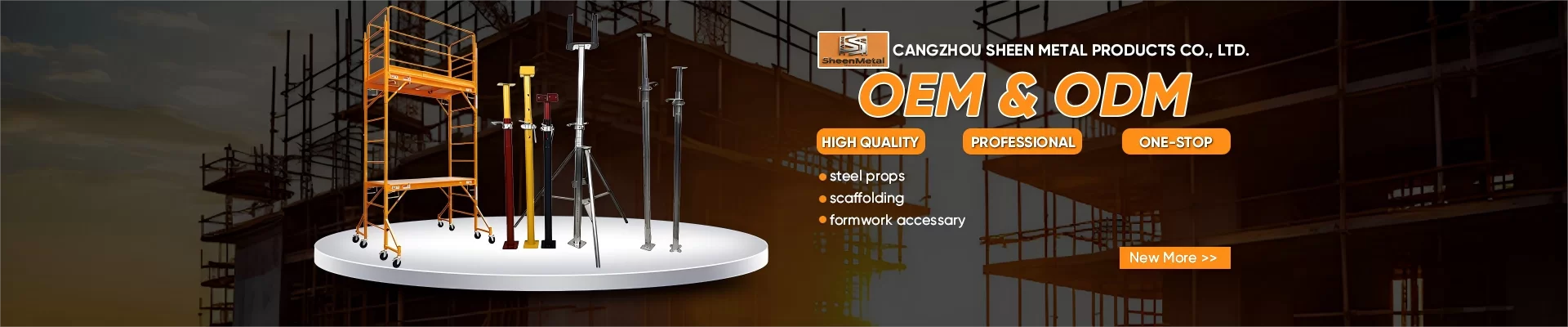

Efficient construction site management relies heavily on the systematic organization of shoring and support equipment. For professional contractors, sourcing from a reliable formwork racks Factory is critical to ensuring that vertical supports, such as Spanish Steel Props, are stored and deployed without compromising structural integrity. This article examines the technical requirements for high-performance shoring storage and the engineering standards that govern modern construction support systems.
The challenge in large-scale engineering projects—such as bridge construction or industrial facility builds—is the transition from storage to active load-bearing. When steel props are handled improperly during storage, they risk deformation or thread damage, which directly impacts site safety. Understanding the relationship between manufacturing precision and operational durability is essential for reducing material waste and optimizing project timelines.
Readers will gain technical insights into the selection of high-strength carbon steel supports, the importance of surface treatments like hot-dip galvanizing for coastal environments, and the criteria for evaluating supplier capabilities. By focusing on load-bearing specifications and precision adjustment mechanisms, project managers can make informed procurement decisions that balance cost-efficiency with unwavering safety standards.
Industrial Formwork Storage Fundamentals
The logistics of architectural support systems involve more than just transport; they require a sophisticated understanding of how modular components interact under stress. In the context of vertical shoring, the "Spanish Prop" design has become a global standard due to its telescopic nature, combining a safety pin for coarse adjustment and a threaded collar for millimetre-perfect fine-tuning. These components must be stored in a manner that prevents axial bending and protects the precision threads from debris. From an engineering perspective, the storage phase is the first step in the quality control chain; if the equipment is not maintained in a specialized rack system, the risk of installation failure increases. Modern manufacturing bases now integrate ERP-based intelligent management to track the lifecycle of these assets, ensuring that each prop is inspected for wall thickness consistency—typically ranging from 1.4mm to 2.5mm—before it is deployed to a high-load zone.
Technical Evaluation for Shoring and Rack Systems
Evaluating a support system requires a multi-dimensional analysis of material science, mechanical engineering, and operational safety. The following sections break down the critical factors that determine the performance of vertical shoring solutions in diverse construction environments.
Load-Bearing Capacity and Stability
The primary function of a steel prop is to provide exceptional stability for slabs and beams during concrete curing. Load capacity is not a static number; it varies based on the extension height of the telescopic tube. For instance, a prop with a 48mm outer diameter typically supports between 20–30 kN, but this capacity diminishes as the inner tube is extended. Ensuring a wide base plate and reinforced welding at the junctions is vital to prevent slippage and ensure stable load distribution across the floor surface.
| Extension State | Load Capacity (Est.) | Stability Risk | Recommended Use |
|---|---|---|---|
| Minimum Extension | High (Max kN) | Low | Heavy-duty beams |
| Mid-range Extension | Moderate | Medium | Standard floor slabs |
| Maximum Extension | Lowest | High (Buckling risk) | Lightweight ceilings |
| Over-extension | Critical Fail | Extreme | Prohibited |
| Off-center Load | Reduced | High (Slippage) | Requires bracing |
| Dynamic Loading | Variable | Medium | Controlled pouring |
Material Selection and Corrosion Resistance
The choice of high-strength carbon steel provides the necessary rigidity for vertical shoring. However, the operational environment dictates the required surface treatment. While powder-coating is sufficient for indoor residential projects, infrastructure projects in coastal regions require hot-dip galvanizing. This process creates a metallurgical bond that prevents oxidation, extending the reusable lifecycle of the props and reducing the long-term cost of ownership compared to single-use timber supports.
Precision Adjustment Mechanisms
Precision in shoring is achieved through the dual-action mechanism of the Spanish Prop. The telescopic system uses a safety pin for rapid height changes and a threaded collar for fine adjustment. This allows engineers to achieve millimetre-perfect alignment, which is crucial for maintaining the level of formwork structures. Any deviation in the thread precision can lead to uneven load distribution, potentially causing structural instability during the critical concrete pouring phase.
Installation and Deployment Efficiency
Speed of installation directly impacts project overhead. The simple telescopic design allows for fast assembly and dismantling without heavy specialized tools. By utilizing standardized dimensions, these props integrate seamlessly with various formwork systems, including plywood setups and steel beams. Efficiency is further enhanced when props are organized in a logical sequence during storage, allowing for rapid mobilization to specific construction zones.
System Compatibility and Integration
A professional shoring solution must be compatible with modular scaffolding and other support accessories. The use of standardized inner (40mm) and outer (48mm) diameters ensures that props can be used alongside couplers and base plates from various certified manufacturers. This interoperability allows contractors to scale their support systems dynamically as project requirements evolve from deep excavations to high-rise superstructure work.
Lifecycle and Asset Management
Unlike traditional wooden shoring, steel props are high-value reusable assets. Effective asset management involves tracking the reuse cycles and performing routine inspections of the threads and safety pins. By implementing a rigorous maintenance schedule, companies can amortize the initial investment over dozens of projects. Asset lifecycle management also includes monitoring the wall thickness for wear, ensuring that no prop with structural degradation is returned to the field.
Safety Compliance and Risk Mitigation
Safety is the non-negotiable priority in architectural support. Compliance with international standards such as ISO 9001 and CE ensures that the materials used meet global safety thresholds. Risk mitigation involves strictly adhering to engineering specifications for prop spacing and ensuring that all supports are placed perfectly vertical on stable ground. Exceeding the rated load capacity for a specific extension height is a primary cause of site accidents and must be prevented through clear labeling and training.
FAQ
What are the primary applications of Spanish Steel Props?
They are primarily used for temporary vertical support of concrete slabs, beams, and formwork. This includes applications in residential, commercial, and industrial construction, as well as specialized infrastructure projects like bridges and tunnels where high load-bearing capacity is required during the curing phase.
How do I adjust the height of a Spanish Steel Prop for maximum precision?
The height is adjusted using a two-step telescopic system. First, use the safety pin to achieve the coarse height approximation. Once the prop is nearly in place, rotate the threaded collar to perform fine-tuning, allowing for millimetre-perfect adjustment against the ceiling or slab.
Which surface treatment is most suitable for outdoor coastal projects?
For harsh or salty coastal environments, hot-dip galvanizing is highly recommended. Unlike standard paint or powder-coating, hot-dip galvanizing provides a deep protective layer of zinc that offers superior corrosion resistance and significantly extends the product's operational lifespan in humid, saline conditions.
Are these props compatible with other formwork systems?
Yes, their standardized dimensions (Inner 40mm / Outer 48mm) make them compatible with a wide variety of formwork systems, including traditional beam-and-plywood setups and modular scaffolding accessories, allowing for seamless integration into existing site shoring plans.
What are the critical safety precautions during installation?
Props must be installed on stable, level ground and kept perfectly vertical to avoid eccentric loading. They should be spaced according to precise engineering specifications, and users must never exceed the rated load capacity relative to the prop's extended height.
How do steel props compare to aluminum props in terms of load?
Steel props generally offer a higher load-bearing capacity and are more cost-effective for heavy-duty structural support. While aluminum props are lighter and easier to transport, steel is the preferred choice for heavy concrete slabs and industrial-grade shoring due to its superior strength-to-cost ratio.
References and further reading
- ISO 9001: Quality Management Systems for Construction Equipment Manufacturing.
- EN 10219: Cold formed welded structural hollow sections of non-alloy and fine grain steels.
- International Standards for Scaffolding and Shoring Safety (SGS/CE guidelines).


