
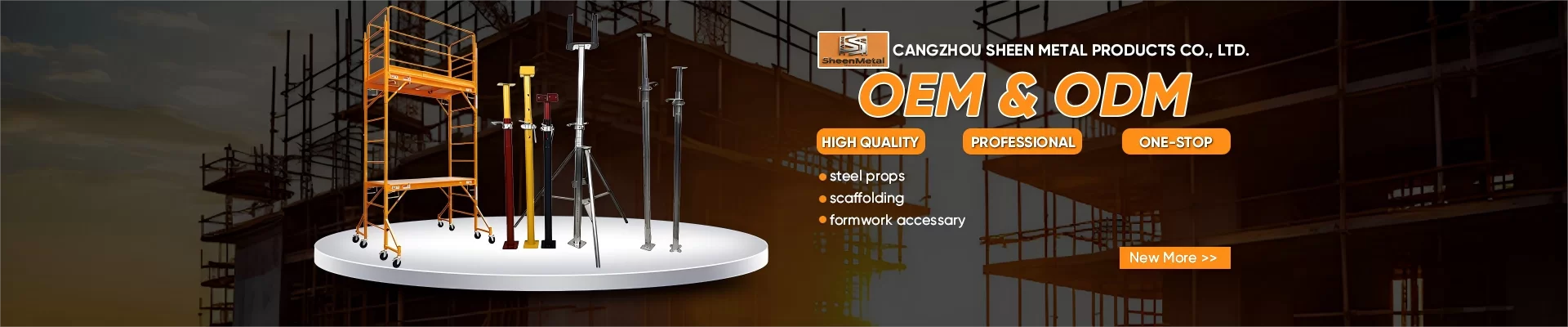

Procuring architectural support systems requires a rigorous balance between structural integrity and operational efficiency. For large-scale engineering projects, the selection of a reliable wholesale scaffolding prop Factory determines not only the safety of the workforce but also the overall project timeline. This guide examines the critical technical specifications and procurement logic necessary for sourcing professional-grade steel props and modular systems.
In the B2B construction sector, the shift toward modularity has redefined how support structures are deployed. Traditional methods are increasingly replaced by high-precision systems, such as Ringlock scaffolding, which utilize specialized connection points to eliminate the need for cumbersome couplers. Understanding the relationship between material grade, surface treatment, and load distribution is essential for project managers seeking to minimize CAPEX while maximizing onsite safety.
Readers will gain a comprehensive understanding of how to evaluate supplier capabilities, analyze the technical trade-offs between galvanized and carbon steel, and implement a selection framework based on international safety standards. By focusing on evidence-based specifications and manufacturing precision, buyers can ensure their infrastructure is built on a foundation of stability and long-term durability.
Industrial Standards for Load-Bearing Props
The fundamental requirement for any architectural support system is its ability to withstand vertical compression and lateral forces without deformation. Modern industrial props are engineered using high-strength carbon steel or galvanized variants, typically featuring standard diameters such as 48.3mm or 60mm to ensure compatibility across various global engineering frameworks. The structural reliability of these components is predicated on the precision of the welding process and the consistency of the steel's molecular composition. In complex environments like bridge engineering or deep excavation, the prop system must not only support the dead load of the structure but also account for dynamic loads and environmental stressors. Consequently, professional manufacturing now integrates ERP-based intelligent management to track raw material procurement, ensuring that every batch of steel meets ISO 9001 and ISO 14001 quality and environmental management standards. This systemic approach to production prevents the common failure points associated with inconsistent wall thickness or poor weld penetration, which are critical risks in high-rise construction.
Strategic Procurement of Support Systems
When evaluating a partner for large-scale supply, procurement officers must look beyond unit pricing and analyze the total cost of ownership. A professional supplier's value is found in their ability to integrate R&D, customized design, and certified production into a single pipeline. The following seven dimensions provide a framework for analyzing the technical and commercial viability of a support system provider.
Material Grade & Durability
The choice between high-strength carbon steel and galvanized steel depends on the operational environment. While carbon steel offers essential rigidity, hot-dip galvanization is mandatory for coastal or high-humidity sites to prevent oxidation. The structural integrity of the prop is directly linked to the steel's yield strength and the precision of the tube diameter, which prevents slipping in modular connections.
| Material Type | Primary Benefit | Ideal Scenario | Risk Factor |
|---|---|---|---|
| Carbon Steel | High Rigidity | Indoor/Dry Sites | Oxidation/Rust |
| Galvanized Steel | Corrosion Resistance | Coastal/Outdoor | Higher Initial Cost |
| Aluminum Alloy | Lightweight | Low-Load Access | Lower Load Capacity |
| Precision Alloy | Extreme Strength | Bridge/Tunnels | Specialized Handling |
| Painted Steel | Basic Protection | Short-term Use | Surface Peeling |
| Hot-dip Galv. | Maximum Lifespan | Industrial Plants | Weight Increase |
Precision in Rosette Engineering
For modular systems like Ringlock, the 360° rosette is the core technical innovation. A precision-engineered rosette with 8 connection holes allows for the integration of ledgers and braces at multiple angles. This removes the dependence on traditional couplers, which are often the weakest link in a scaffolding structure. Buyers should verify the tolerances of the rosette lock to ensure a mechanical fit that resists vibration and shifting under heavy loads.
Load Capacity Evaluation
Load-bearing capacity is not a static number but a variable based on configuration. Standard platform levels typically support between 200kg and 300kg, but the total system capacity depends on the vertical standards' spacing and the quality of the base jacks. Engineering firms should request load-test data that validates the structural stability of the props when subjected to maximum modular stacking, often exceeding 20 meters.
Corrosion Resistance Protocols
Surface treatment is the primary determinant of a system's reusable lifecycle. Hot-dip galvanization provides a metallurgical bond that protects the steel even if the surface is scratched during transport. This is significantly more durable than industrial painting. Evaluating the micron thickness of the zinc coating is a standard procurement check to ensure the product can withstand harsh weather across diverse regions like Southeast Asia or Europe.
Assembly Efficiency Metrics
Labor costs often exceed material costs in B2B construction. Modular systems are designed to reduce setup and dismantling time through "Fast Locking" mechanisms. By comparing the assembly speed of a rosette-based system against a tube-and-coupler setup, firms can calculate the reduction in man-hours. The ability to rapidly configure irregular geometries further enhances site efficiency and reduces project downtime.
Compliance & Global Certifications
Compliance with international standards is a non-negotiable safety requirement. Certifications such as CE and SGS, alongside ISO 9001, indicate that the manufacturing process follows strict quality control. For global projects, ensuring that the props meet the specific labor and safety regulations of the destination country prevents costly site shutdowns and legal liabilities.
Lifecycle Value Assessment
The investment return on high-grade scaffolding is realized through reusability. Low-cost, low-quality props often deform after a single project, whereas precision-engineered systems from a certified factory can be reused across dozens of sites. Analyzing the total CAPEX against the number of projected reuse cycles allows procurement managers to justify the premium for higher-specification materials.
FAQ
What is the primary technical advantage of Ringlock systems over traditional frame scaffolding?
The primary advantage is the 360° rosette connection system. Unlike frame scaffolding, which is rigid and limited in configuration, Ringlock allows ledgers and braces to be connected at multiple angles without separate couplers. This results in significantly higher structural flexibility, faster assembly times, and the ability to adapt to irregular architectural geometries.
How should a buyer evaluate the load capacity of a scaffolding prop?
Evaluation should be based on the material grade (e.g., high-strength carbon steel), the wall thickness of the tube, and the certification of the load tests. A buyer should check if the rated capacity (typically 200-300kg per platform level) is validated by international standards and request the specific load-bearing charts for different modular stacking heights.
Is hot-dip galvanization necessary for all construction projects?
While not mandatory for short-term indoor projects, hot-dip galvanization is essential for any outdoor, coastal, or high-humidity environment. It provides a superior corrosion-resistant layer compared to industrial paint, ensuring the steel does not rust, which would otherwise compromise the structural integrity and safety of the scaffolding system.
What are the common mistakes to avoid when sourcing from a scaffolding factory?
The most common mistake is prioritizing the lowest unit price over material certifications. Low-cost props often have inconsistent wall thickness or poor weld quality, leading to structural failure. Buyers should instead verify ISO 9001/14001 certifications, check for CE or SGS compliance, and confirm the factory's ability to provide customized engineering solutions.
Can modular scaffolding be used for curved building facades?
Yes, specifically systems utilizing the rosette connection. Because the connections can be made at various angles and positions along the vertical standard, the system can be configured to follow curved or irregular shapes. This makes it ideal for bridges, industrial plants, and modern architectural designs where linear scaffolding is impractical.
How does the use of an ERP system in manufacturing benefit the buyer?
An ERP-based intelligent management system ensures end-to-end traceability from raw material procurement to final delivery. For the buyer, this means greater consistency in product quality, more accurate lead times, and a lower risk of receiving batches with sub-standard material specifications, as every production step is documented and monitored.
References and further reading
- ISO 9001:2015 Quality Management Systems Requirements.
- European Standard EN 12810 for Modular Scaffolding Systems.
- SGS Global Certification Guidelines for Construction Steel Products.


