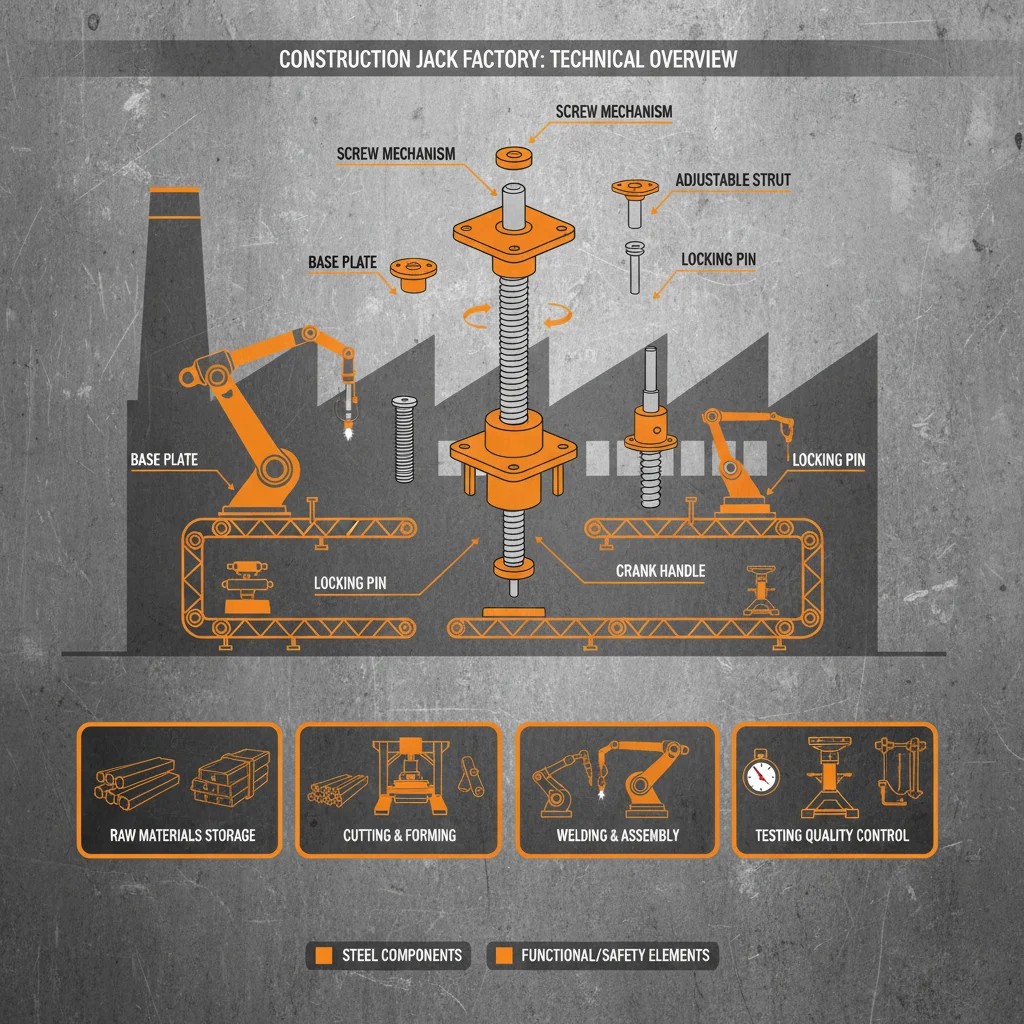
Selecting a reliable scaffolding parts Factory is more than a procurement decision; it is a fundamental safety requirement for any large-scale construction project. In an industry where a single faulty coupler or a substandard screw jack can compromise the structural integrity of an entire site, the precision of manufacturing becomes the primary line of defense against onsite accidents.
Globally, the demand for high-quality modular access systems has surged as urban infrastructure grows in complexity. From the towering skyscrapers of Asia to the industrial refurbishments in Europe, the role of a professional scaffolding parts Factory is to ensure that every component—whether a Ringlock rosette or a heavy-duty caster wheel—meets rigorous international load-bearing standards.
By integrating advanced metallurgy with precision engineering, a top-tier factory transforms raw steel into critical safety assets. Understanding the nuances of production, from galvanization processes to alloy selection, allows project managers to optimize costs without sacrificing the safety of the workforce or the efficiency of the build.
The Global Significance of a Quality Scaffolding Parts Factory
The modern construction landscape relies heavily on the ability to scale heights safely and efficiently. A dedicated scaffolding parts Factory serves as the backbone of this process, providing the specialized hardware required for everything from Frame Scaffolding to complex Ringlock systems. Without the standardization provided by these factories, the interoperability of parts across different sites would be impossible, leading to dangerous improvised solutions.
Furthermore, international standards such as ISO and EN 12810 mandate strict tolerances for metal components. A professional factory ensures that every tube, coupler, and screw jack undergoes rigorous stress testing. This commitment to quality reduces the risk of catastrophic structural failure, ensuring that workers can perform high-altitude tasks with complete confidence in their equipment.
Core Components of Industrial Scaffolding Systems
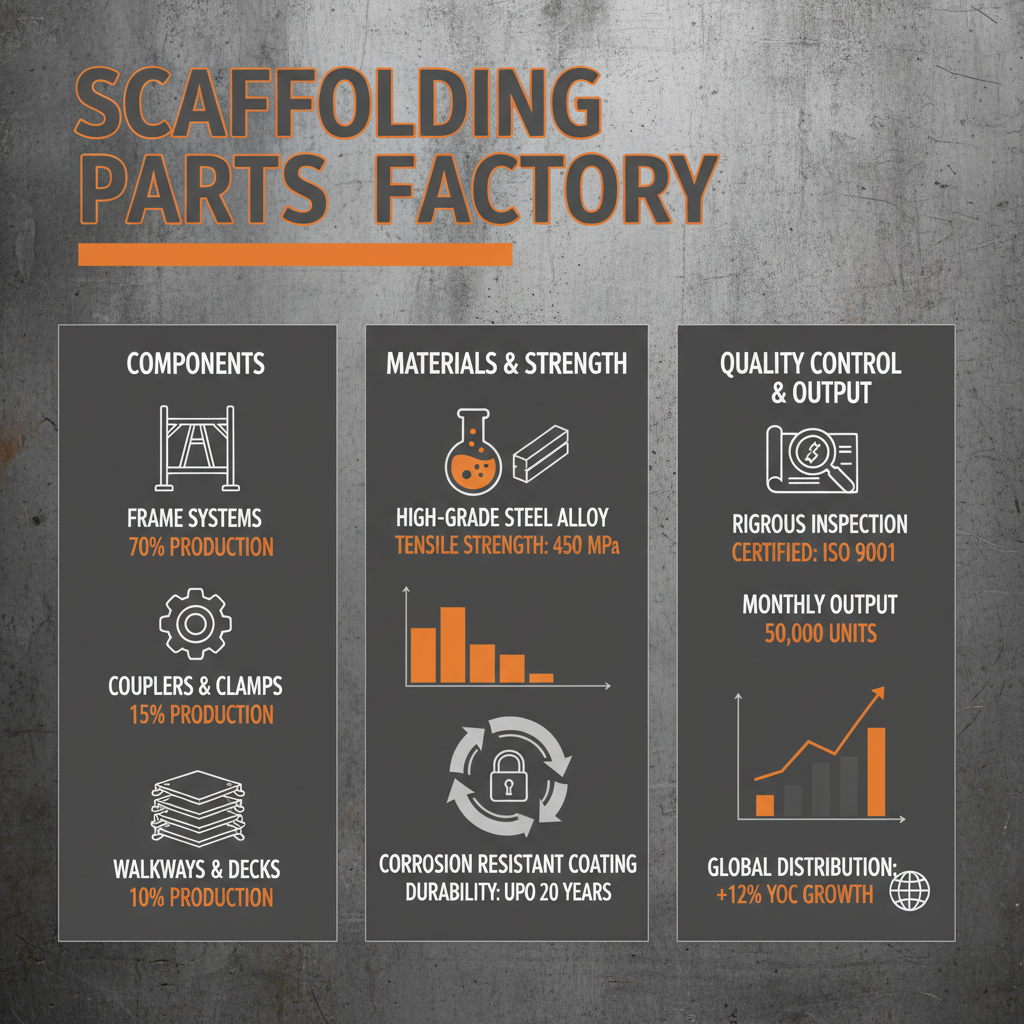
To understand the output of a scaffolding parts Factory, one must look at the essential components that form a stable structure. Frame Scaffolding and Ringlock Scaffolding represent the primary architectural choices, but the "magic" lies in the smaller parts. Scaffolding Tube and Couplers act as the connective tissue, allowing for customized configurations in irregular architectural spaces.
For mobility and precision leveling, components like the Scaffolding Caster Wheel and Scffolding Screw Jack are indispensable. Caster wheels enable the rapid deployment of Collapsible Mobile Scaffolds in warehouse or indoor maintenance settings, while screw jacks allow the system to be perfectly leveled on uneven terrain, distributing the load evenly across the foundation.
Finally, the working platform is where the actual labor occurs. A factory specializing in Scaffolding Board And Plank focuses on slip resistance and load-bearing capacity, ensuring that the surface is as safe as the supporting metal frame. Together, these components create a synergistic system that balances strength, flexibility, and user safety.
Engineering Standards and Durability Factors
The durability of equipment from a scaffolding parts Factory is largely determined by the surface treatment. Hot-dip galvanization is the gold standard, providing a thick layer of zinc that protects the steel from oxidation and corrosion, especially in coastal environments where salt air accelerates rust.
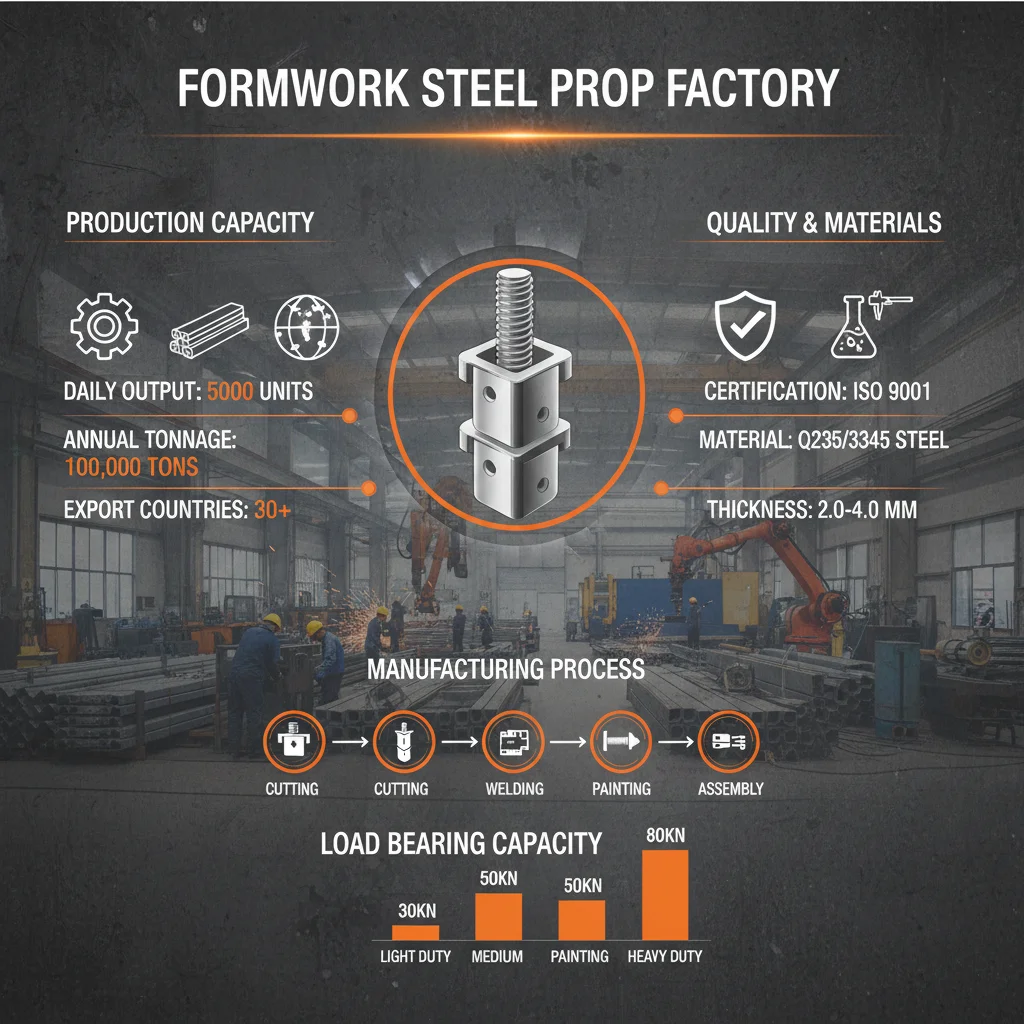
Material grade is equally critical; using Q235 or Q345 high-strength steel ensures that the scaffolding parts Factory can produce components that withstand extreme compressive forces without buckling, adhering to global safety coefficients.
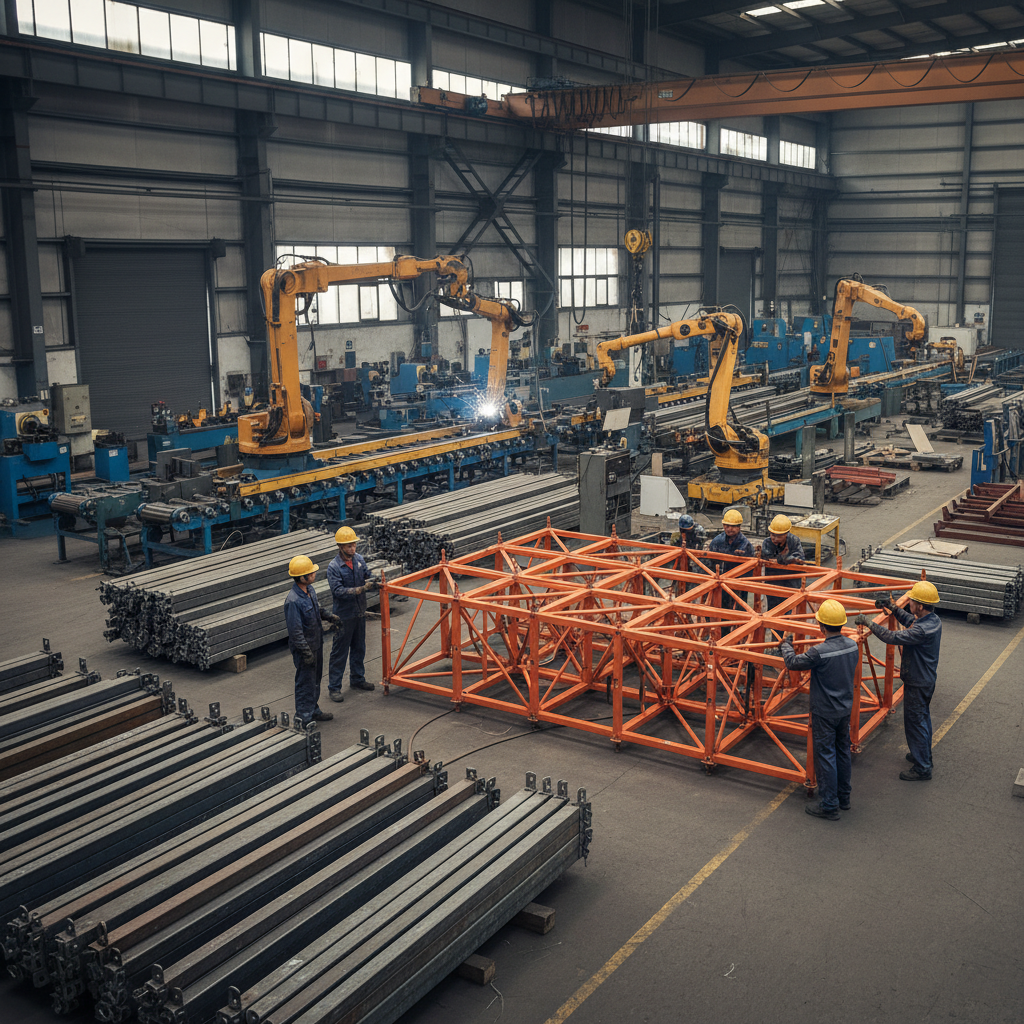
Precision welding and seamless tube production are the final pillars of durability. Automated robotic welding reduces human error, ensuring that every joint in a frame or ringlock component is structurally sound and capable of enduring thousands of assembly and disassembly cycles over its lifespan.
Cost-Efficiency and Scalability in Production
For construction firms, the goal is to balance high safety standards with operational budgets. A high-capacity scaffolding parts Factory achieves cost-efficiency through economies of scale. By utilizing automated punching and bending machines, they can produce thousands of identical, high-precision parts with minimal waste, passing those savings on to the end-user.
Scalability also refers to the modular nature of the products. Whether a project requires a small mobile unit or a massive formwork system for a dam, the standardized parts allow for seamless expansion. This modularity ensures that components can be reused across multiple projects, significantly lowering the long-term capital expenditure for the contractor.
Performance Metrics of Scaffolding Parts Factory Output
Global Applications and Industrial Use Cases
The versatility of a scaffolding parts Factory is evident in its wide range of applications. In urban centers, Ringlock systems are the preferred choice for complex facades and heritage restoration projects due to their flexibility and high load capacity. Meanwhile, in the oil and gas sector, specialized scaffolding components are used to build temporary platforms around massive refinery pipes.
Beyond commercial construction, these components play a critical role in humanitarian efforts. In post-disaster relief operations, the rapid deployment of mobile scaffolds and basic frame systems allows NGOs and government agencies to establish temporary shelters or repair critical infrastructure quickly, demonstrating that the output of a quality factory has a direct impact on social resilience.
Long-Term Value and Safety Reliability
Investing in components from a reputable scaffolding parts Factory yields dividends in the form of reduced maintenance and extended equipment life. High-quality steel and superior coatings mean that parts can be used for decades rather than years, drastically reducing the cost per use over the life of the asset.
From a psychological perspective, safety reliability fosters a culture of trust on the job site. When workers know that the screw jacks are perfectly threaded and the planks are reinforced, they can focus on their technical tasks with greater precision and less anxiety. This mental security is an often-overlooked benefit that directly correlates to higher productivity and fewer human errors.
Ultimately, the logical choice is to prioritize quality over the lowest initial price. The cost of a single failure—both in terms of potential legal liabilities and human life—far outweighs the marginal savings gained from sourcing substandard parts from an uncertified manufacturer.
Future Trends in Scaffolding Manufacturing
The scaffolding parts Factory of tomorrow is embracing digital transformation. BIM (Building Information Modeling) is now being integrated into the manufacturing process, allowing factories to produce custom-engineered components tailored to a specific 3D model of a building, reducing waste and assembly time on site.
Sustainability is also driving innovation. There is a growing shift toward using recycled high-grade steel and implementing "green" galvanization processes that minimize chemical runoff. These eco-friendly initiatives not only satisfy stringent environmental regulations but also appeal to the increasing number of "Green Building" certified projects globally.
Automation continues to evolve, with AI-driven quality control systems replacing manual inspections. High-resolution cameras and sensors can now detect microscopic weld defects in real-time, ensuring that every single part leaving the factory is flawless.
Comparative Analysis of Modern Scaffolding Manufacturing Technologies
| Technology |
Impact on Safety |
Production Speed |
Environmental Score |
| Robotic Welding |
Extreme High |
Very Fast |
7/10 |
| Hot-Dip Galvanizing |
High (Corrosion) |
Moderate |
6/10 |
| BIM Integration |
High (Planning) |
Fast (Custom) |
9/10 |
| AI Quality Control |
Absolute |
Instant |
8/10 |
| Recycled Steel Alloy |
Moderate-High |
Moderate |
10/10 |
| Modular Casting |
High |
Fast |
7/10 |
FAQS
You should request a portfolio of certifications, specifically looking for ISO 9001 for quality management and EN 12810 or ANSI/OSHA standards for product safety. A reputable factory will provide third-party test reports (such as SGS or TUV) proving the load-bearing capacity and material grade of their components.
It depends on the project. Frame scaffolding is faster to erect for simple, straight runs. However, Ringlock scaffolding from a professional factory offers superior versatility and strength for complex structures. For long-term industrial investment, Ringlock is generally more valuable due to its flexibility across different architectural shapes.
Yes, significantly. Hot-dip galvanizing creates a metallurgical bond between the zinc and the steel, providing far superior protection compared to electro-galvanizing or painting. Components from a factory using this process can last 20-50 years even in harsh environments, whereas untreated steel can fail within months due to rust.
This is strongly discouraged. Even if parts look identical, slight variations in tolerances (fractional millimeters) can lead to loose joints or uneven load distribution. For maximum safety, always source your entire inventory from a single, consistent scaffolding parts Factory to ensure 100% compatibility.
Choose a screw jack based on the maximum height adjustment needed and the total load of the tower. Ensure the factory uses a high-precision thread to prevent "slippage" under load. Always check that the base plate is wide enough to distribute the weight across the ground surface to prevent sinking.
They are safe provided they are manufactured by a certified factory using reinforced frames and high-grade locking caster wheels. Always observe the maximum weight capacity and ensure the outriggers are deployed to increase the stability base before ascending.
Conclusion
The integrity of any construction project rests upon the smallest components produced by a scaffolding parts Factory. From the precision of the Ringlock rosette to the corrosion resistance of a galvanized tube, every detail contributes to the safety of the worker and the success of the build. By prioritizing certified manufacturing, material quality, and modular scalability, companies can achieve a perfect balance between operational cost-efficiency and uncompromising safety.
Looking forward, the industry is moving toward a smarter, greener era where BIM and AI-driven quality control will eliminate human error entirely. For contractors and project managers, the strategy is clear: partner with a manufacturer that invests in innovation and adheres to the strictest global standards. To ensure your next project is supported by world-class engineering, visit our website: www.sheenmetalscaffold.com.