Selecting a reliable formwork steel prop Factory is often the silent deciding factor in the structural integrity of a high-rise project. While many procurement officers focus solely on the unit price, the actual value lies in the convergence of metallurgical precision, load-bearing consistency, and adherence to international safety certifications.
The challenge in modern construction is not just finding a supplier, but finding a manufacturing partner that understands the dynamic stresses of formwork systems. From the precision of the telescopic locking mechanism to the corrosion resistance of the galvanized finish, every technical detail affects the speed of the pouring cycle and the safety of the onsite crew.
This guide examines the critical benchmarks for evaluating steel prop production, contrasting standard manufacturing with high-precision engineering, and providing a framework for professionals to optimize their temporary support procurement.

Engineering Benchmarks for Steel Prop Manufacturing

A professional formwork steel prop factory is distinguished by its ability to maintain tight tolerances across thousands of units. The core of a steel prop's reliability is its wall thickness and the quality of the weld at the collar joint. Inconsistent steel grades or poor welding techniques can lead to catastrophic buckling under peak loads during concrete curing.
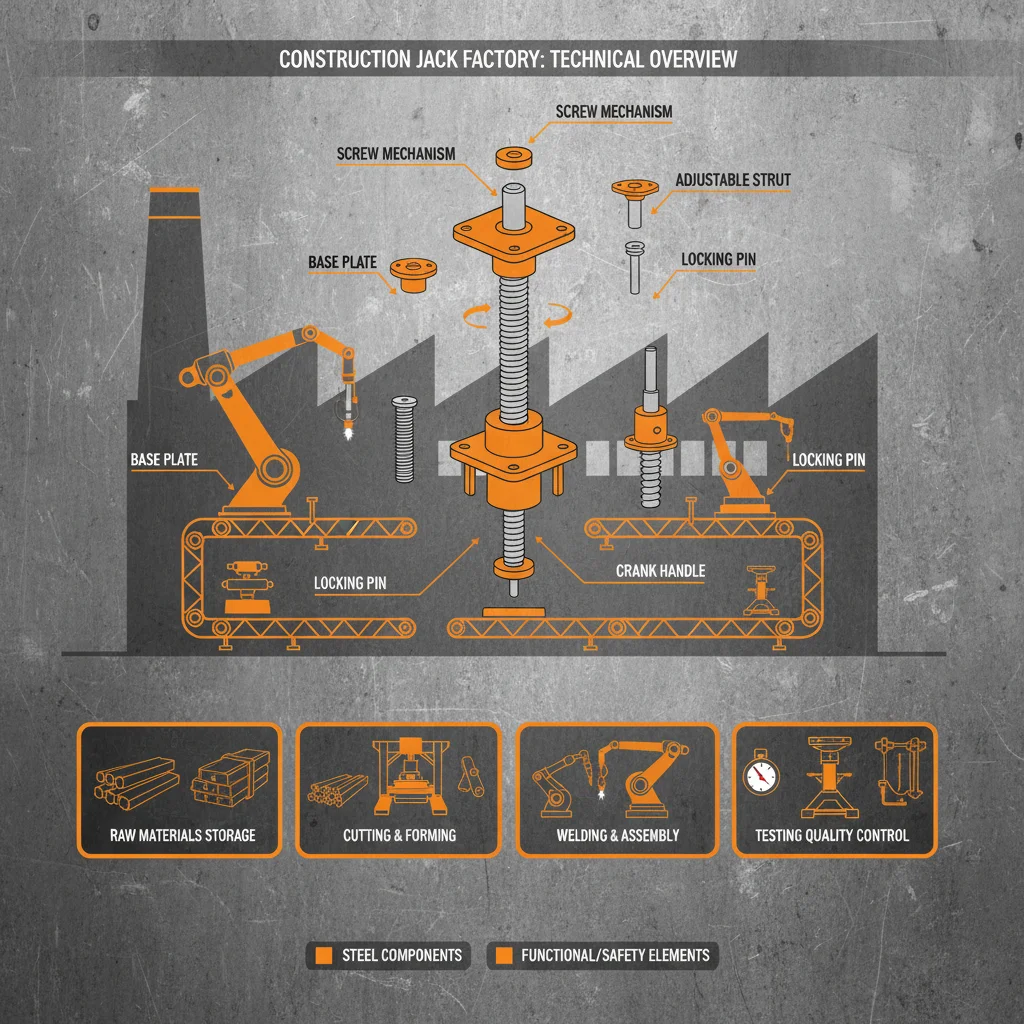
Advanced factories utilize automated production lines and ERP-based management to ensure that raw material procurement—typically high-grade galvanized steel—meets specific yield strength requirements. This systemic approach minimizes human error in the cutting and punching phases, which are critical for the alignment of the adjustment pins.
Furthermore, compliance with ISO 9001 and international safety standards like CE or SGS is not merely a formality. These certifications indicate that the factory employs rigorous batch testing, including load-bearing tests and coating thickness measurements, to ensure every prop performs identically in the field.
Critical Technical Factors in Load-Bearing Capacity
The structural efficiency of a steel prop depends on the ratio between its outer diameter and wall thickness. A higher precision in this ratio ensures that the prop can support the designed tonnage without premature deformation. The telescopic mechanism must allow for smooth adjustment while maintaining a rigid lock once the pin is engaged.
Corrosion protection is another technical pillar. In humid or coastal environments, untreated steel degrades rapidly, compromising the structural integrity of the prop. Hot-dip galvanization is the industry gold standard, providing a sacrificial zinc layer that protects the base steel from oxidation for years of repeated use.
Finally, the base and head plates must be engineered to distribute the load evenly. Poorly designed plates can cause "punching" through the formwork boards or create unstable contact points on the ground, increasing the risk of lateral displacement during the pouring process.
Application Scenarios for Specialized Steel Props
Steel props are not one-size-fits-all tools; their application varies significantly based on the architectural requirement. In standard slab support, high-capacity props are used to hold the weight of wet concrete and reinforcement steel. Here, the focus is on vertical load capacity and rapid assembly.
For more complex projects, such as deep excavations or tunnel engineering, customized steel prop systems are required. These often involve reinforced joints and specialized couplers to handle non-vertical loads or extreme pressures. The integration of Ringlock or Frame scaffolding systems often complements these props to create a comprehensive support matrix.
In interior renovation or facility maintenance, mobility becomes a priority. This is where lightweight, adjustable props or combined systems like the Collapsible Mobile Scaffold are utilized to provide flexible access and support in confined spaces where heavy machinery cannot operate.
Comparative Performance Analysis of Prop Systems
When comparing standard market props with those produced by a high-precision factory, the difference is most evident in the "Safety Margin" and "Operational Lifespan." Standard props often show significant variance in load capacity, forcing engineers to over-specify the number of props to compensate for uncertainty.
By utilizing optimized technical parameters—such as reinforced collars and superior galvanized coatings—precision-engineered props allow for a more lean and efficient support layout without compromising safety. This reduces the total amount of material required on site and speeds up the dismantling process.
formwork steel prop Factory Performance Metrics
As shown in the data, precision-manufactured systems exhibit higher consistency in load distribution and a significantly lower rate of deformation over multiple reuse cycles, directly impacting the project's total cost of ownership (TCO).
Procurement Risks and Quality Verification Methods
The primary risk in procurement is the "Invisible Defect"—structural weaknesses that are not visible until the prop is under maximum load. To mitigate this, buyers should move beyond visual inspections and request mill test reports for the steel used and load-test certificates for the specific batch.
Verification should focus on three key areas: the weld penetration at the joint, the thickness of the zinc coating (using a magnetic gauge), and the precision of the pin-hole alignment. Any deviation in these areas can lead to "binding" during adjustment or premature failure.
Experienced contractors also evaluate the factory's quality control process. A facility that integrates an intelligent management system for raw material tracking is far more likely to deliver a consistent product than one relying on manual sampling.
Evolution of Automated Production in Architectural Support
The shift toward "Industry 4.0" is transforming how support systems are manufactured. Automated robotic welding is replacing manual arcs, ensuring that every joint has the same penetration and strength. This eliminates the human variance that historically plagued large-scale prop orders.
We are likely to see a further integration of smart materials and sensors in high-end formwork systems. While still in the early stages, the possibility of "smart props" that can signal when they have reached their load limit could revolutionize site safety and monitoring.
Furthermore, the move toward sustainable manufacturing means factories are optimizing steel usage through better design, reducing waste without sacrificing strength. This trend aligns with global green building certifications and reduces the carbon footprint of temporary construction works.
Decision Framework for Supplier Selection
Choosing between suppliers requires a weighted analysis of technical capability, certification, and logistics. For a project where safety is the absolute priority, the weight should shift toward certified quality and proven track records in similar engineering environments.
The following matrix provides a comparison of different procurement approaches to help managers align their choice with project needs.
| Selection Metric | Generic Supplier | Certified Factory | Precision Engineering Partner |
|---|---|---|---|
| Quality Control | Manual Sampling | Batch Testing | Real-time ERP Tracking |
| Material Grade | Standard Carbon Steel | Galvanized Steel | High-Yield Specialized Steel |
| Load Consistency | Moderate Variance | Low Variance | Strictly Controlled |
| Durability | Short-term Use | Multi-year Use | Extended Lifecycle |
| Certifications | Local Only | ISO/CE Certified | Global Standards Compliance |
| Customization | Limited / None | Basic Options | Project-Specific Engineering |
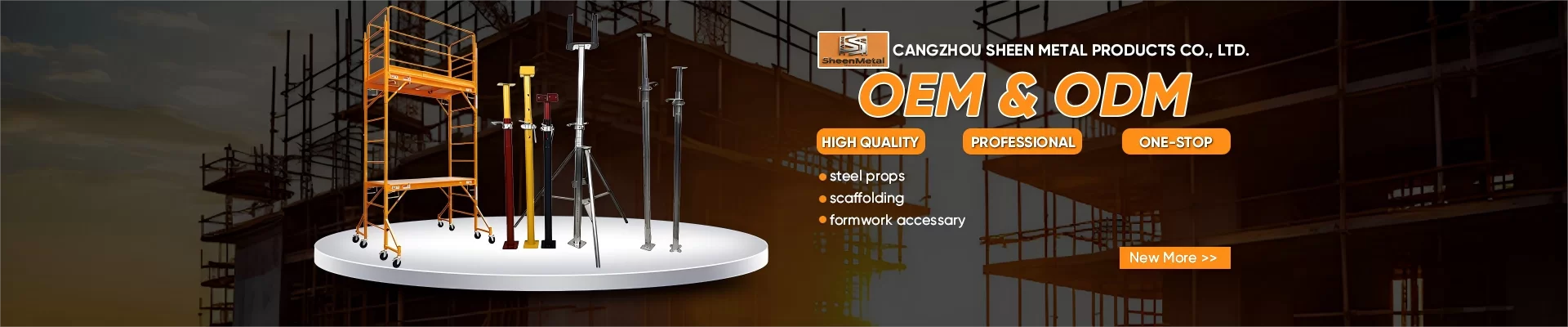
For those seeking a balance of cost-effectiveness and uncompromising safety, partnering with a manufacturer like Cangzhou Sheen Metal Products Co., Ltd. ensures that the architectural support system is backed by R&D and modern automated production lines.
Frequently Asked Questions
Conclusion
The integrity of any construction project is only as strong as its temporary supports. Moving from a "commodity purchase" mindset to a "strategic partnership" with a high-precision formwork steel prop factory reduces project risk, enhances onsite safety, and lowers the long-term cost of equipment maintenance.
Professionals evaluating support systems for their next project can review detailed product specifications and company capabilities through www.sheenmetalscaffold.com to ensure their site is built on a foundation of reliability and engineering excellence.