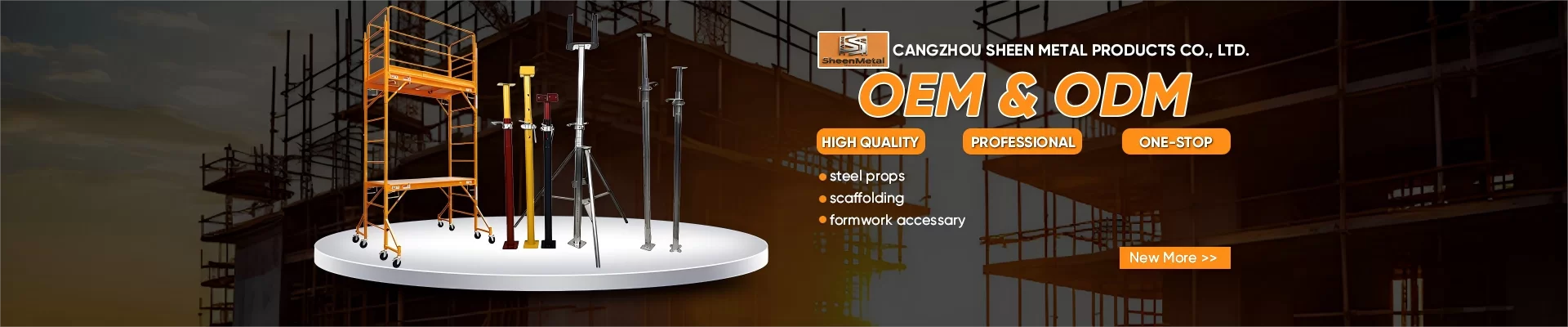
Precision Modular Support from a construction jack Factory
Securing structural stability on complex construction sites requires more than just basic materials; it demands a precision-engineered support ecosystem. For modern contractors, the transition toward modular systems has redefined how we approach safety and efficiency. Ringlock Scaffolding, a cornerstone of this evolution, provides a versatile framework that accommodates irregular geometries and high-load requirements without the labor-intensive reliance on traditional couplers. By integrating a unique rosette connection, this system streamlines the assembly process and reduces on-site risks.
When sourcing from a professional construction jack Factory, the focus shifts from simple procurement to acquiring a comprehensive engineering solution. Whether it is for high-rise facades, industrial plant maintenance, or bridge engineering, the reliability of the vertical standards and the precision of the locking mechanisms are paramount. This guide explores the technical advantages of modular support systems and how high-strength carbon steel components ensure long-term durability in harsh environments.

The Engineering Logic Behind Rosette Connection Systems
The primary innovation of the Ringlock system lies in its rosette-based connection. Unlike traditional tube-and-clamp methods that require manual tightening of individual couplers, the rosette design allows multiple horizontal ledgers and diagonal braces to be connected at various angles around a single point. This 360-degree flexibility enables the construction of complex scaffolding configurations, making it an ideal choice for architectural projects with curved or irregular structures.
From a technical standpoint, this design significantly distributes loads more evenly across the entire framework, reducing the risk of structural failure under high-stress conditions. The use of high-strength carbon steel ensures that the vertical standards can withstand substantial compressive forces, while the locking pins provide a secure, mechanical bond that is resistant to vibration and shifting. This structural integrity is critical for maintaining a safe working environment for personnel and materials at height.
Furthermore, the elimination of countless individual couplers leads to a dramatic reduction in assembly time. Labor costs are lowered as the modular nature of the components allows for rapid vertical stacking and horizontal expansion. For large-scale infrastructure projects, where timelines are tight and safety compliance is non-negotiable, this efficiency provides a competitive edge in project execution.

Optimizing Site Safety and Structural Adaptability
Safety in scaffolding is not just about the strength of the steel, but about the stability of the overall configuration. The Ringlock system incorporates essential safety accessories such as guardrails, toe boards, and stabilizers to ensure full compliance with international safety standards. By utilizing anti-slip steel or aluminum decking for platforms, the system minimizes the risk of slips and falls, providing a secure base for workers and their tools.
Adaptability is another core strength. These systems can be customized to accommodate various heights and widths, which is particularly useful for facade work or deep excavation support. The integration of adjustable base jacks allows the system to be leveled perfectly even on uneven terrain, ensuring that the vertical load path remains straight and the structure remains plumb. This prevents eccentric loading, which is a common cause of scaffolding collapse in traditional setups.
To combat the corrosive nature of outdoor construction environments, components are typically treated with hot-dip galvanization or high-grade industrial paint. This surface treatment prevents oxidation and ensures a long service life across multiple projects. The result is a reusable asset that provides high ROI for contractors who operate across various global regions with differing climatic challenges.
Practical Procurement Considerations for Global Engineering Projects
When selecting a supplier for architectural support, procurement managers must look beyond the initial price point. The total cost of ownership includes assembly speed, durability, and compliance certifications. A reputable manufacturer should provide evidence of ISO 9001 and ISO 14001 certifications, as well as CE or SGS marks, to guarantee that the materials meet global safety requirements.
Key evaluation factors include the precision of the tube diameters—typically 48.3 mm—and the quality of the welding on the rosettes. Poorly welded joints are a primary point of failure. Therefore, investing in products from a facility with automated production lines and ERP-based quality management ensures consistency across thousands of components, which is vital for the seamless assembly of large-scale structures.
Additionally, buyers should consider the availability of complementary accessories. A complete solution should include everything from ladders and platforms to specialized connectors for tunnel engineering. A "one-stop" procurement approach reduces logistics complexity and ensures that all components are fully compatible, eliminating the danger of mixing mismatched parts from different vendors on a single job site.
Technical Specifications and Application Suitability
| Technical Parameter | Standard Specification | Performance Impact | Recommended Application |
|---|---|---|---|
| Material Grade | High-Strength Carbon Steel | Superior Load Bearing | High-Rise Buildings |
| Surface Treatment | Hot-Dip Galvanized | High Corrosion Resistance | Coastal/Industrial Sites |
| Connection Type | 360° Rosette Design | Rapid Assembly / Flexibility | Irregular Architectures |
| Tube Diameter | 48.3 mm / 60 mm | Standardized Compatibility | General Infrastructure |
| Load Capacity | 200–300 kg per platform | Safe Material Handling | Facade & Bridge Work |
Evaluating Manufacturing Capabilities for Long-Term Reliability
The reliability of a support system is directly tied to the manufacturing process. Advanced facilities utilize automated welding and cutting technology to ensure that every ledger and standard is identical. This precision is what allows the "modular" aspect of the system to work; if components vary by even a few millimeters, the cumulative error in a 20-meter stack can lead to instability.
Quality control should encompass the entire lifecycle, from raw material procurement to final delivery. Testing for yield strength and weld penetration is essential to prevent catastrophic failure. Companies that integrate R&D into their production can optimize designs to reduce weight without sacrificing strength, making the system easier to transport and reposition on-site.
For international buyers, the ability of a manufacturer to provide customized solutions for complex projects—such as tunnel engineering or deep excavation—is a significant advantage. This requires a deep understanding of structural engineering and the ability to adapt standard modular parts into project-specific configurations, backed by technical consulting and logistics support.
Future Trends in Modular Architectural Support Systems
The construction industry is moving toward "Smart Scaffolding," where the focus is on maximizing safety through better materials and more intuitive designs. We are seeing a trend toward lightweight, high-strength alloys that reduce the physical strain on workers during installation while maintaining the same load-bearing capacities as traditional steel.
Sustainability is also becoming a priority. The move toward fully reusable and recyclable modular systems reduces the waste generated by disposable timber scaffolding. By investing in durable, galvanized steel systems, companies can significantly lower their environmental footprint and long-term procurement costs.
Moreover, the integration of digital planning tools allows engineers to model the scaffolding structure in 3D before a single piece is shipped. This ensures that every rosette connection is planned for maximum efficiency and that all necessary accessories are included in the initial order, eliminating costly delays and on-site modifications.
Frequently Asked Questions About Modular Support
How does Ringlock scaffolding differ from traditional tube-and-coupler systems?
The main difference is the connection method. Ringlock uses a fixed rosette system that allows multiple components to lock into a single point, eliminating the need for individual couplers. This results in faster assembly, higher structural stability, and lower labor costs.
What materials are best for scaffolding in coastal or high-humidity areas?
Hot-dip galvanized steel is highly recommended for these environments. The galvanization process creates a thick, protective zinc layer that prevents rust and corrosion, ensuring the structural integrity of the system over many years of use.
Can this modular system be used for non-linear or curved structures?
Yes, the 360-degree rosette design allows ledgers and braces to be attached at various angles. This flexibility makes it ideal for circular tanks, curved facades, and other complex architectural geometries.
What safety certifications should I look for when choosing a supplier?
You should verify that the manufacturer holds ISO 9001 for quality management and ISO 14001 for environmental management. Additionally, look for CE and SGS certifications to ensure the products meet international safety and material standards.
How do I ensure the stability of the scaffolding on uneven ground?
The use of adjustable base jacks is essential. These allow you to precisely level the vertical standards regardless of the ground slope, ensuring the load is distributed vertically and the structure remains stable.
Is it possible to customize the load capacity for specific engineering needs?
While standard components have set ratings, load capacity can be optimized by adjusting the configuration of ledgers and diagonal braces. Consult with a construction jack Factory to determine the best spacing and support layout for your specific load requirements.
Technical References and Further Reading
- ISO 9001: Quality Management Systems Standards
- OSHA Scaffolding Safety Guidelines and Requirements
- Eurocode 3: Design of Steel Structures
- SGS International Certification for Construction Materials
Choosing the right architectural support system is a critical decision that impacts both the safety of the workforce and the efficiency of the project. By focusing on precision engineering, certified materials, and modular flexibility, contractors can build a foundation for success on any scale. For those seeking reliable, globally-proven solutions, partnering with a manufacturer committed to innovation and quality is the most effective way to ensure long-term project value.
Related Articles