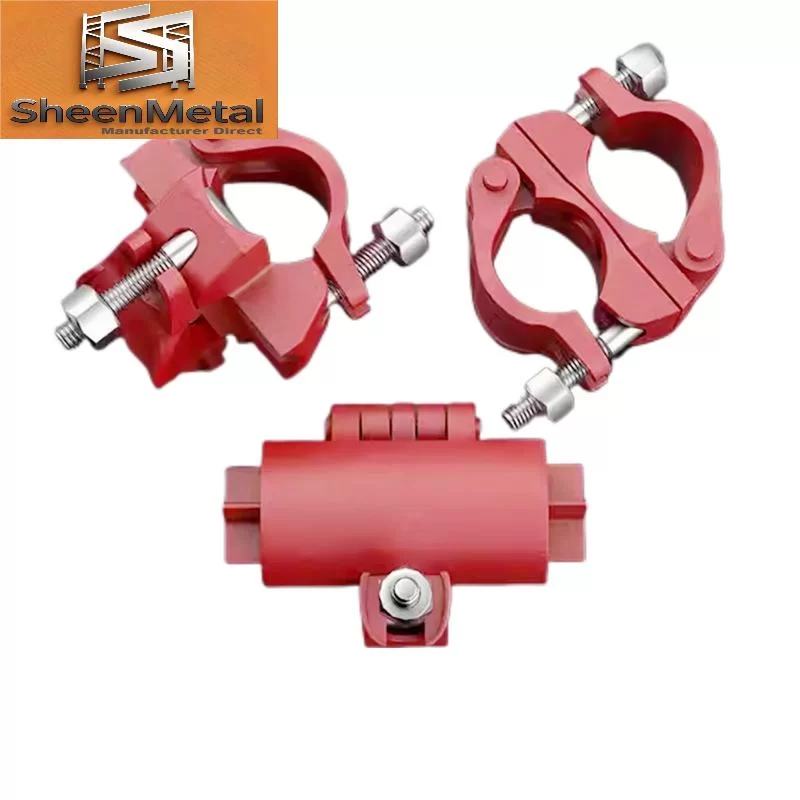


Casting Couplers provide a high-performance mechanical splicing solution engineered specifically for reinforced concrete construction. By facilitating a seamless, end-to-end connection between steel rebars, these precision connectors eliminate the need for traditional lap splicing, thereby drastically reducing material waste and preventing steel congestion in heavily reinforced structural sections.
Designed to adhere to rigorous international building codes, our Casting Couplers are available in threaded, compression, and wedge-type configurations to meet the demands of diverse architectural scenarios. From high-rise columns and bridge infrastructure to precast concrete elements, they ensure superior tensile and compressive strength, providing long-term stability and safety for modern infrastructure projects.
Detailed Parameters
| Material | High-strength carbon steel or alloy steel | Coupler Types | Threaded, compression, or wedge-type |
|---|---|---|---|
| Diameter Range | 12 mm to 50 mm (Custom sizes available) | Load Capacity | Equal to or exceeding rebar yield strength |
| Surface Treatment | Galvanized, epoxy-coated, or stainless steel | Compliance Standards | ISO 15835, BS 8666, ASTM A1034 |
| Application | Reinforced concrete / Precast elements | Connection Method | Mechanical interlock / High-torque threading |
| Environment | Corrosion-resistant for harsh conditions | Installation | Embedded during casting or post-tensioned |
Key Advantages
Structural Integrity
Precision engineering ensures uniform stress distribution and eliminates weak points across connected bars.
Rapid Installation
Fast on-site attachment or embedding during casting allows for significantly accelerated construction schedules.
Material Efficiency
End-to-end joining replaces lap splicing, significantly reducing overall steel consumption and project costs.
Reduced Congestion
Minimizes rebar crowding in dense sections, allowing for cleaner and more effective concrete pouring.
High Versatility
Compatible with various rebar diameters and grades, fitting both industrial and residential scenarios.
Long-term Durability
Anti-corrosion coatings ensure high performance even in the most aggressive environmental conditions.
Product Gallery


Management Platforms
Inventory Control
Real-time tracking of coupler sizes and quantities to ensure zero project downtime.
Precision QC
Strict adherence to ISO and ASTM standards via automated quality inspection systems.
Logistics Sync
Optimized supply chain management for just-in-time delivery to construction sites.
Compliance Monitoring
Digital certification tracking for all mechanical splicing components used on-site.
Site Integration
Coordinated distribution of embedded couplers for precast concrete assembly.
Technical Support
Dedicated engineering guidance for torque control and alignment verification.
Investment Return Comparison
| Comparison Metric | Traditional Lap Splicing | Casting Coupler Splicing |
|---|---|---|
| Steel Consumption | High (due to overlap) | Low (end-to-end join) |
| Installation Speed | Slow / Labor Intensive | Fast / Efficient |
| Concrete Quality | Risk of honeycombing | High flow / Clean placement |
| Structural Safety | Variable stress zones | Uniform stress distribution |
| Overall Project Cost | Higher long-term cost | Reduced material & labor cost |
Frequently Asked Questions
Unlike lap splicing, which requires overlapping two rebars, Casting Couplers connect bars end-to-end mechanically. This reduces steel waste and prevents congestion in reinforced sections.
Our products are manufactured to meet global reliability standards including ISO 15835, BS 8666, and ASTM A1034.
Yes, we offer various surface treatments including galvanization, epoxy coatings, and stainless steel construction to withstand harsh environmental conditions.
We provide standard couplers for diameters ranging from 12mm to 50mm, with custom sizes available upon request for specific engineering needs.
Absolutely. Embedded couplers are specifically designed for precast elements to ensure seamless and strong connections during on-site assembly.
Capacity is verified through stringent tensile and compressive testing to ensure the connection strength equals or exceeds the yield strength of the connected rebar.