Selecting a reliable scaffolding steel prop Factory involves more than comparing price lists; it requires an understanding of load-bearing physics and metallurgical standards. In high-load construction environments, the difference between a standard prop and a precision-engineered support system can determine the structural safety of an entire project.
The shift toward modularity and high-strength alloy steel has redefined how vertical supports are manufactured and deployed. Modern engineering now demands a balance between rapid installation speeds and unwavering stability, pushing factories to integrate automated quality control and strict compliance with international building codes.
For procurement managers and site engineers, identifying a partner that integrates R&D with large-scale production is critical. By analyzing the technical requirements of a scaffolding steel prop Factory, professionals can optimize their supply chain and reduce on-site risks.


Historically, vertical supports relied on heavy timber or rudimentary steel poles with limited adjustability. The emergence of the modern scaffolding steel prop Factory transformed these static elements into dynamic systems. By introducing telescopic designs and high-torque locking mechanisms, the industry shifted from "approximate fitting" to "precision engineering."
This evolution was driven by the need for safer formwork and the rise of high-rise concrete structures. Today, these systems are no longer viewed as mere accessories but as critical safety infrastructure, integrating high-strength carbon steel and advanced anti-corrosion coatings to extend service life across multiple project cycles.
The load-bearing capacity of a steel prop is governed by the intersection of material grade and geometric stability. High-strength carbon steel or alloy steel is the industry standard, as these materials offer the necessary yield strength to prevent buckling under immense axial loads. The wall thickness of the tube is a critical variable; even a fractional decrease in thickness can exponentially increase the risk of structural failure during concrete pouring.
Beyond the material, the precision of the threading and the locking pin mechanism determines how effectively the load is distributed. If the threads are not perfectly aligned or the tolerance is too loose, the prop may experience eccentric loading, which creates a bending moment that significantly reduces its effective capacity.
Furthermore, the surface treatment—whether galvanized, epoxy-coated, or stainless steel—plays a functional role in strength retention. Corrosion not only affects the appearance but creates pits in the metal that act as stress concentrators, potentially leading to premature failure in harsh environmental conditions.
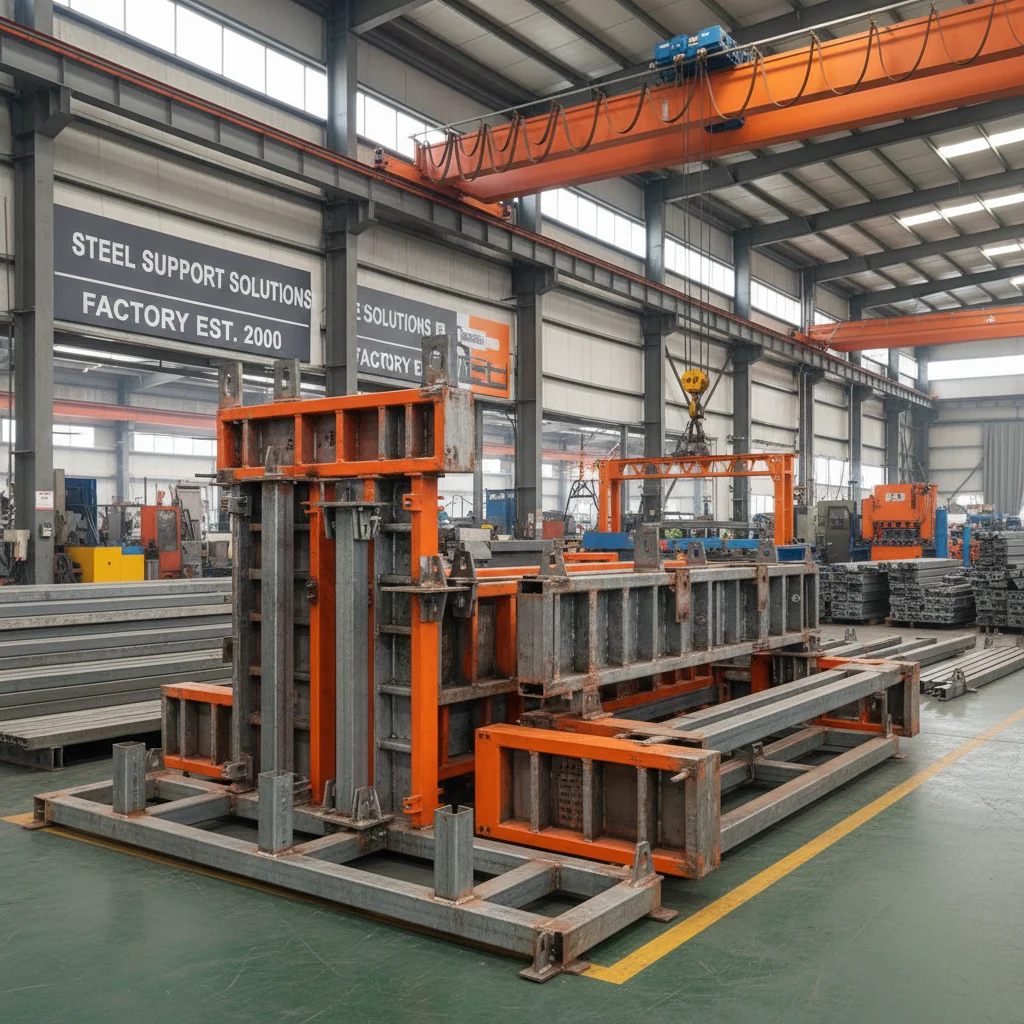
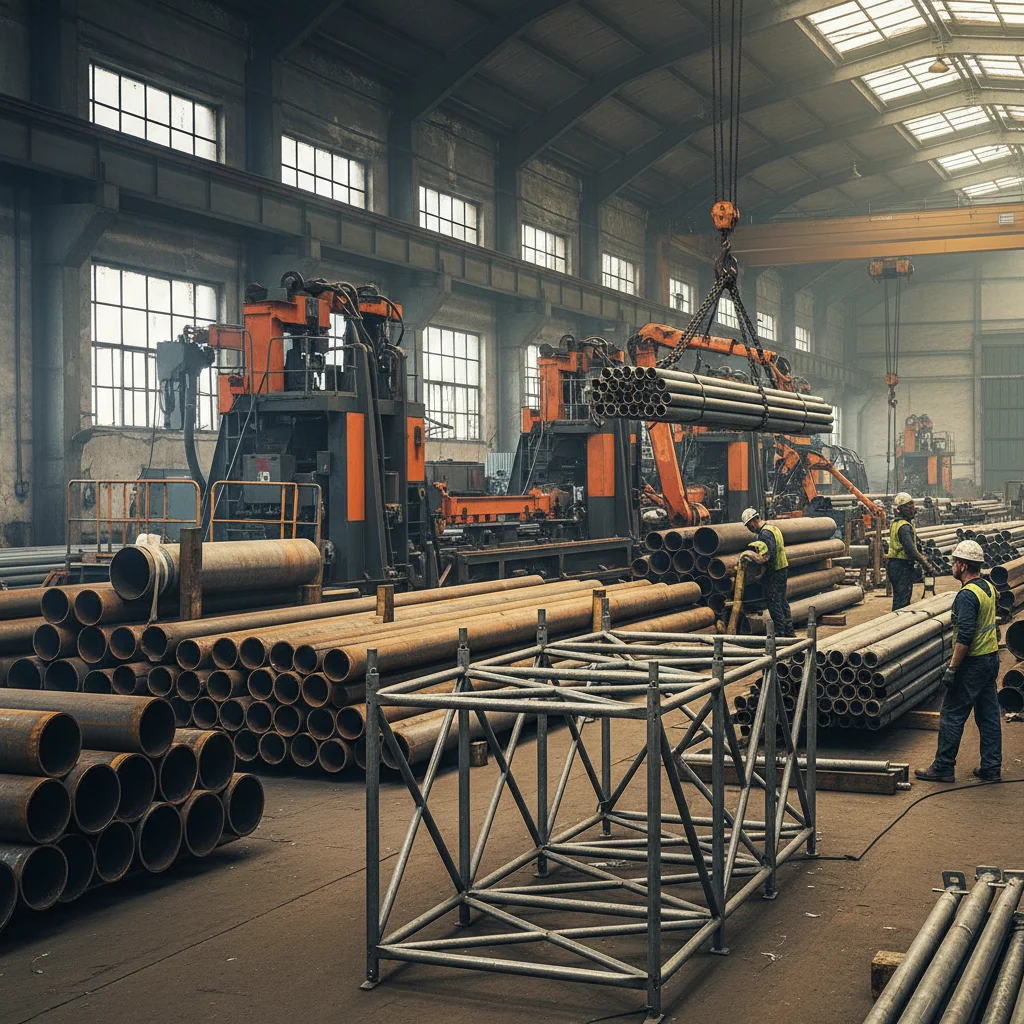
A professional production facility relies on automated production lines to eliminate human error in welding and cutting. The integration of ERP-based intelligent management systems allows for real-time tracking of raw material batches, ensuring that every prop leaving the factory meets the specific grade of steel required for its load rating.
Structural reliability is not a result of the final inspection, but a byproduct of a continuous quality loop—where automated testing of tensile strength and compressive load happens at multiple stages of the assembly process.
Compliance with international standards such as ISO 9001, CE, and SGS is the baseline for trust. However, the most advanced factories go further by implementing digital certification tracking for every mechanical component. This ensures that when a prop is deployed on a bridge or a skyscraper, there is a verifiable data trail regarding its manufacturing tolerances and load tests.
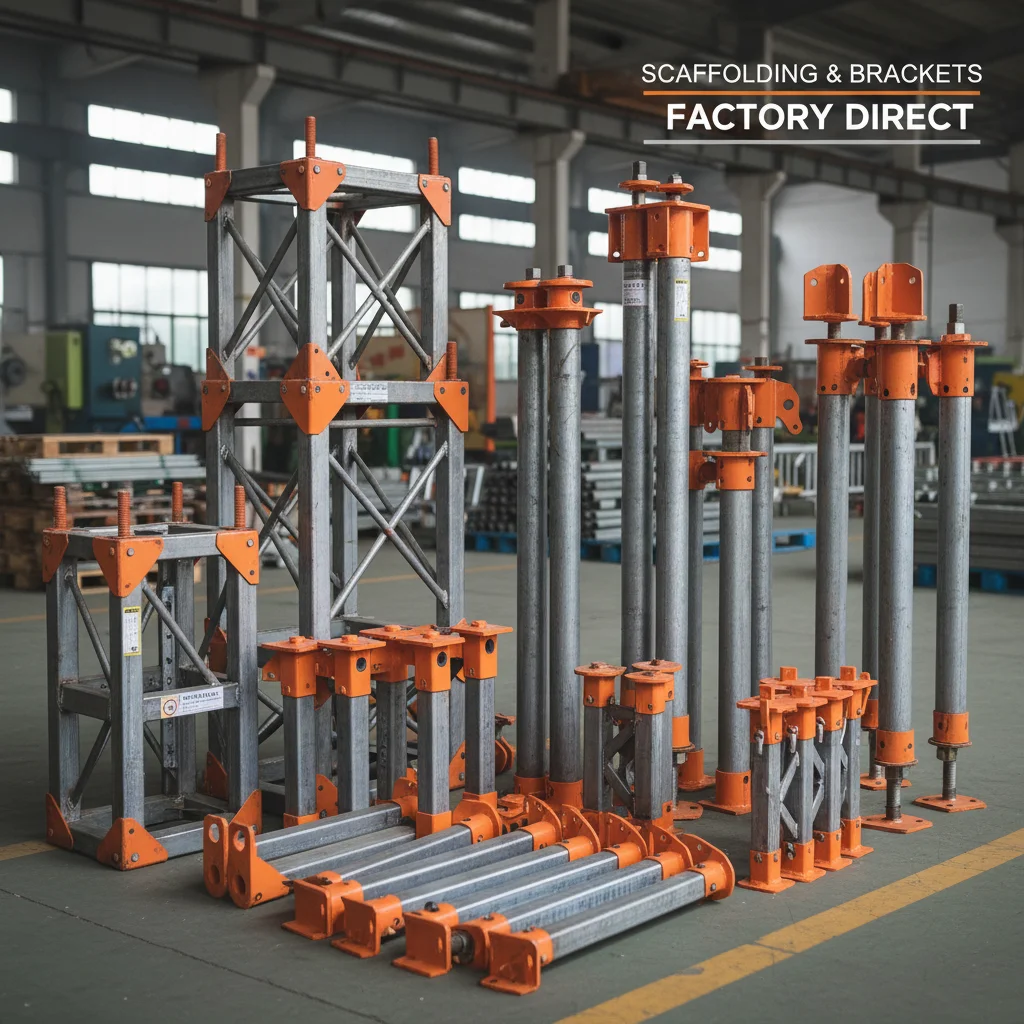
Different construction needs require different support characteristics. Heavy-duty props are designed for massive slab supports where axial load is the primary concern, whereas lightweight adjustable props are prioritized for interior finishing and ceiling work where speed and ease of handling are paramount.
When evaluating the efficiency of these systems, we look at the "Capacity-to-Weight Ratio." A high-efficiency prop provides maximum load support with minimum self-weight, reducing the labor required for transport and installation while maintaining a high safety factor.
In bridge engineering, the requirements for vertical supports are extreme. Here, props must withstand not only the static weight of the concrete but also the dynamic loads and vibrations caused by machinery and wind. This is where the expertise of a specialized scaffolding steel prop Factory becomes evident, as they can provide customized steel prop systems for deep excavations and tunnel engineering where standard dimensions fail.
Conversely, in municipal residential projects, the focus shifts toward the versatility of the equipment. The use of collapsible mobile scaffolds and Ringlock systems alongside steel props allows for a modular approach to support, enabling contractors to reconfigure their support structures rapidly as the project progresses from the foundation to the upper floors.
The construction industry is facing increasing pressure to reduce its carbon footprint. For a steel prop factory, this means moving toward a circular economy model. This involves not only using recycled steel in the manufacturing process but also designing products for extreme durability, ensuring that props can be reused across dozens of sites without losing structural integrity.
Innovation is also focusing on "Material Efficiency." By using advanced alloys, manufacturers can produce props that are lighter yet stronger, reducing the fuel required for logistics and lowering the total embodied energy of the project. This transition is supported by R&D teams who optimize the cross-sectional geometry of the tubes to maximize strength while minimizing steel consumption.
Looking forward, the integration of IoT sensors into support systems may allow for real-time load monitoring. Imagine a prop that can alert a site manager via a smartphone if the load exceeds 90% of its rated capacity, virtually eliminating the risk of unexpected collapse and enhancing on-site safety.
When choosing a supplier, procurement teams often fall into the trap of focusing solely on the unit price. However, the true cost of ownership includes the lifespan of the prop, the speed of installation, and the cost of potential delays due to equipment failure. A comprehensive evaluation framework should prioritize certified quality and technical support over the lowest bid.
It is also essential to assess the factory's ability to scale. For large-scale infrastructure projects, just-in-time delivery is critical. A factory with an optimized supply chain and logistics sync can prevent project downtime by ensuring that the right quantity of props and accessories, such as screw jacks and couplers, arrive exactly when needed.
Finally, the level of technical guidance provided by the manufacturer is a key differentiator. A partner that offers engineering guidance for torque control and alignment verification provides a level of risk mitigation that a simple commodity trader cannot match.
| Evaluation Factor | Commodity Grade | Professional Grade | Engineering Grade |
|---|---|---|---|
| Material Certification | Basic Mill Cert | ISO/CE Certified | Full Traceability |
| Load Distribution | Variable/Unstable | Uniform/Stable | Precision-Engineered |
| Corrosion Resistance | Basic Paint | Hot-Dip Galv | Advanced Epoxy/Alloy |
| Installation Speed | Slow (Manual) | Moderate | Rapid (Modular) |
| Service Lifespan | Short (1-3 projects) | Medium (5-10 projects) | Long (15+ projects) |
| Total Project Cost | High (Due to waste) | Balanced | Optimized (Low Waste) |
Standard props are often mass-produced with wider tolerances and basic materials, suitable for light residential work. Engineering-grade supports are manufactured in a specialized scaffolding steel prop Factory using high-strength alloy steel and automated precision welding. They offer verified load capacities, tighter tolerances for height adjustment, and superior surface treatments, making them suitable for heavy-duty industrial and infrastructure projects where failure is not an option.
Verification should be a two-step process. First, request the Material Test Report (MTR) and certification of compliance (e.g., ISO 15835 or ASTM standards) from the factory. Second, perform random site testing using a calibrated compression machine. A reputable manufacturer will provide a load-capacity chart that correlates the prop's extended height with its maximum safe load, allowing engineers to calculate the necessary spacing for a given slab weight.
Yes, significantly. While paint provides a basic barrier, it chips easily during transport and installation, leaving the steel exposed to oxidation. Hot-dip galvanization creates a metallurgical bond between the zinc and the steel, providing sacrificial protection that prevents rust from spreading even if the surface is scratched. For projects in coastal areas or high-humidity environments, galvanized or epoxy-coated props are essential to maintain structural integrity over several years of reuse.
Absolutely. In complex projects, steel props are frequently integrated with Ringlock or Frame Scaffolding to provide localized high-load support within a larger modular framework. For instance, while a Ringlock system provides the overall access and stability, individual steel props may be used to support the heaviest points of a concrete pour. Using a single-source provider ensures that the accessories, such as base plates and screw jacks, are compatible across all systems.
The most common causes are overloading beyond the rated capacity and "eccentric loading," where the prop is not perfectly vertical. When a prop is tilted, the axial load is converted into a bending force, which can cause the tube to buckle at a fraction of its rated capacity. Additionally, using worn-out locking pins or failing to properly tighten the adjustment collar can lead to sudden height loss and structural instability.
R&D translates directly into material efficiency and safety. A factory with strong R&D can optimize the steel grade and wall thickness to provide the same load capacity with less weight, reducing shipping costs and labor. They can also develop specialized solutions, such as props for deep excavation or tunnel engineering, which require non-standard lengths or specialized locking mechanisms that commodity factories simply cannot produce.
The selection of a scaffolding steel prop Factory is a strategic decision that impacts both the budget and the safety profile of a construction project. By moving beyond basic price comparisons and focusing on material traceability, manufacturing precision, and the provider's technical support, firms can ensure their structures are built on a foundation of reliability.
As the industry moves toward more sustainable and digitally integrated support systems, the partnership between the engineer and the manufacturer becomes more critical. Investing in high-quality, certified equipment not only reduces immediate risks but also lowers the long-term cost of ownership through increased durability and reuse.