Establishing a high-capacity warehouse Factory requires more than just floor space; it demands a precision-engineered structural support system to handle massive vertical and horizontal loads. In the metal fabrication and construction industry, the integrity of the building depends entirely on the quality of the shoring and scaffolding used during the assembly phase.
Whether constructing an industrial storage hub or a manufacturing plant, the selection of temporary support systems—such as steel props and formwork accessories—directly influences the safety of the workforce and the long-term stability of the facility. Inefficient support often leads to structural misalignments or, in worst-case scenarios, catastrophic collapses during concrete pouring.
To optimize the construction of a modern industrial facility, professionals must evaluate the interplay between load-bearing capacity, installation speed, and material durability. By integrating certified scaffolding solutions, developers can reduce project timelines while adhering to strict global safety standards.

The Critical Role of Structural Shoring in Industrial Builds

When planning a warehouse Factory, the initial shoring phase is the most volatile. This process involves utilizing temporary supports to hold the weight of the structure until the concrete reaches its full design strength. Without precise vertical load transfer, the risk of slab deflection increases, which can jeopardize the entire facility's layout.
The complexity of industrial ceilings, often requiring high clearances for machinery and racking, necessitates the use of heavy-duty steel props and specialized accessories. The goal is to ensure that horizontal beams are cradled securely, preventing any lateral shifting that could lead to structural instability.
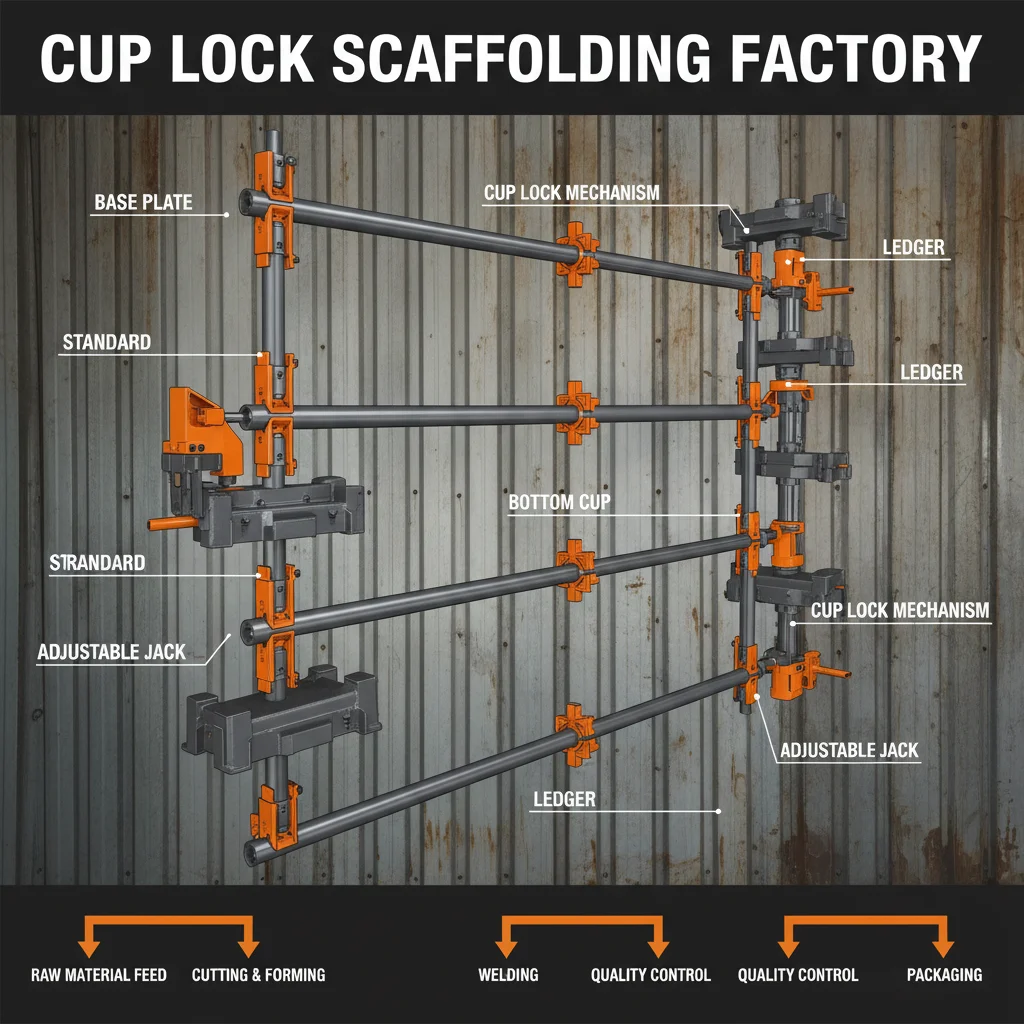
Modern engineering focuses on the "systemic approach," where the interaction between the base plate, the adjustable prop, and the head accessory is treated as a single load-bearing unit. This ensures that forces are distributed uniformly across the floor, protecting the underlying substrate from point-load failure.
Technical Advantages of Integrated Steel Prop Systems
High-performance shoring relies on materials that can withstand dynamic stress. The use of Q235 high-strength carbon steel ensures that supports can handle significant tonnage without permanent deformation. When coupled with advanced surface treatments like hot-dip galvanization, these systems resist corrosion even in damp construction environments.
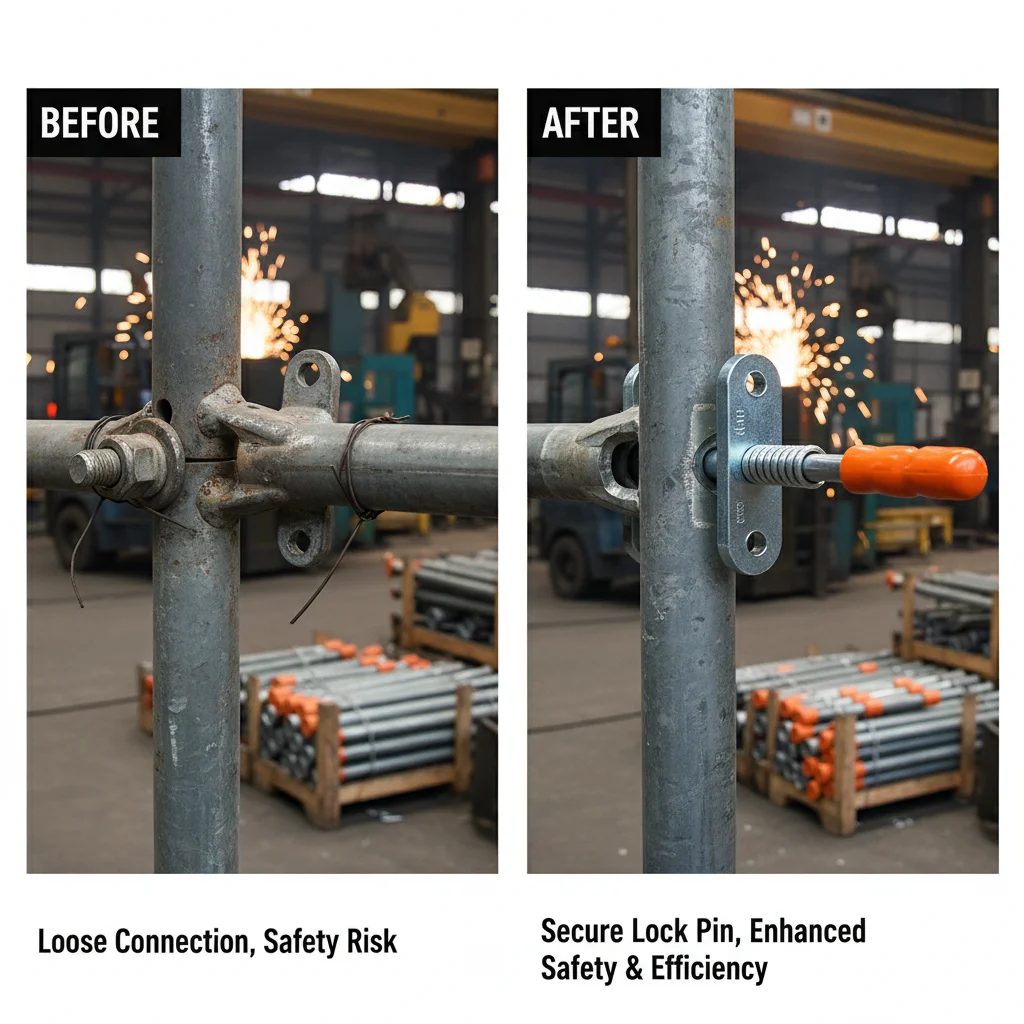
A key technical highlight is the integration of the Forkhead accessory. By providing a stable cradle for H20 timber beams or steel sections, it prevents beams from slipping during concrete placement. This specialized design allows for 90-degree rotations to accommodate either single or double beam configurations, offering unmatched versatility on site.
Furthermore, the use of standardized diameters (typically 48–76 mm) ensures compatibility across different scaffolding brands. This standardization reduces the need for custom adapters, which are often the weakest points in a temporary support network, thereby enhancing overall site safety.
Practical Applications Across Warehouse Construction Phases
In the early stages of factory construction, steel props and tripod bases are deployed to create the primary shoring grid. The tripod base is particularly essential for increasing the stability of the vertical prop, distributing the weight over a wider area to prevent sinking into uncompacted soil or temporary flooring.
As the project moves toward slab casting, formwork systems are implemented. Here, the Forkhead becomes indispensable, supporting the primary beams that hold the concrete forms. This is critical in residential-industrial hybrid zones where precision in floor leveling is required for the installation of automated warehouse robotics.
Beyond the main structure, modular scaffolding like Ringlock or Frame systems are used for the installation of overhead lighting, HVAC ducting, and fire suppression systems. These mobile and collapsible solutions allow workers to reach high ceilings safely without the need for permanent platforms, accelerating the fit-out phase of the warehouse.
Evaluating Load Stability and Performance Benchmarks
Performance in industrial shoring is measured by the ratio of load capacity to installation time. Traditional timber shoring is often slow to deploy and lacks the precise adjustability of steel props. By switching to an integrated steel system, contractors can achieve higher vertical precision and significantly reduce the risk of human error during alignment.
When analyzing the effectiveness of accessories like the Forkhead, the focus shifts to "slippage resistance." A standard flat prop head provides minimal grip, whereas a forked design locks the beam into place, effectively neutralizing lateral forces during the vibration process of concrete settling.
warehouse Factory Performance Metrics
The data indicates that while initial material costs for high-strength steel systems may be higher, the reduction in labor hours and the increase in reuse cycles lead to a lower total cost of ownership over multiple project phases.
Procurement Strategies for High-Durability Metal Supports
Procuring scaffolding for a large-scale project requires a balance between certification compliance and cost-effectiveness. Buyers should prioritize suppliers who offer ISO 9001 and CE certifications, as these guarantee that the steel's tensile strength and weld integrity have been rigorously tested.
Key evaluation factors include the surface treatment. For factories in coastal or humid regions, hot-dip galvanizing is superior to powder coating, as it provides a deeper protective layer that prevents oxidation at the joints—the primary failure point for most adjustable props.
Additionally, procurement should include a comprehensive set of accessories. Rather than buying props in isolation, sourcing a full system—including screw jacks, base plates, and forkheads—ensures that all components are designed to work together, eliminating compatibility gaps that could compromise structural safety.
Future Trends in Modular Architectural Support Systems
The industry is moving toward "smart shoring," where load sensors may be integrated into steel props to provide real-time data on stress levels during the curing process. This could allow engineers to remove supports at the earliest safe moment, significantly accelerating construction timelines.
There is also a growing shift toward sustainable metallurgy. The use of recycled high-strength steel, processed through energy-efficient furnaces, is becoming a requirement for projects seeking LEED or other green building certifications. This trend does not sacrifice strength but reduces the carbon footprint of the construction phase.
Furthermore, the adoption of ERP-driven inventory management by suppliers like Cangzhou Sheen Metal Products allows for just-in-time delivery of scaffolding components. This reduces on-site congestion in tight warehouse footprints and ensures that materials are delivered precisely when the project phase requires them.
Comparative Analysis of Shoring Solutions for Factories
Selecting the right support system depends on the specific load requirements and the architectural complexity of the warehouse. While simple frame scaffolding is sufficient for low-height maintenance, complex concrete slabs require the precision of adjustable steel prop systems combined with professional formwork accessories.
The following table compares different support approaches based on typical industrial application needs, highlighting the trade-offs between cost, stability, and installation efficiency.
| Support System | Primary Use Case | Stability Level | Installation Effort |
|---|---|---|---|
| Adjustable Steel Props | Slab Shoring | Very High | Moderate |
| Ringlock Scaffolding | Complex Facades | High | High |
| Frame Scaffolding | General Access | Moderate | Low |
| Timber Shoring | Minor Support | Low | Moderate |
| Collapsible Mobile | Interior Fit-out | Moderate | Very Low |
| Tripod-based Props | Deep Foundations | Maximum | Moderate |
For those seeking a balance of safety and efficiency, the integration of a high-strength steel prop system with specific accessories like the Forkhead remains the industry gold standard for industrial warehouse construction.
Frequently Asked Questions
Conclusion
The construction of a warehouse Factory is a high-stakes engineering task where the margin for error is slim. Utilizing a coordinated system of steel props, tripods, and forkheads ensures that structural loads are managed with precision, protecting both the assets and the workers on site.
By focusing on certified materials and technical compatibility, contractors can achieve a safer, faster, and more cost-effective build. For those evaluating high-performance architectural support systems, detailed product specifications and company capabilities can be reviewed through www.sheenmetalscaffold.com.