
April 16, 2026
Choosing the Right Scaffold Coupler Factory for Your Construction Needs
In the world of industrial construction, the integrity of a structure depends heavily on the smallest components. Finding a reliable scaffold coupler Factory is not just about sourcing hardware; it is about ensuring the safety of every worker on site. Couplers serve as the critical joints that hold scaffolding tubes together, and any failure in these components can lead to catastrophic results. This guide will explore the essential factors to consider when selecting a manufacturing partner, the types of couplers available, and how professional standards ensure long-term stability. Whether you are a contractor or a procurement manager, understanding the manufacturing process is key to quality assurance.

Quality Standards in a Professional Scaffold Coupler Factory
A top-tier scaffold coupler Factory must adhere to rigorous international standards such as EN74 or BS1139. These certifications guarantee that the couplers can withstand specific load-bearing capacities and resist environmental wear. The manufacturing process typically involves drop forging or pressing, followed by precision machining to ensure a perfect fit around the scaffolding tubes. Quality control teams perform slip tests and load tests to ensure that the clamping force remains consistent across different batches. By prioritizing these standards, factories eliminate the risk of structural slippage, providing peace of mind for engineers and on-site operators.
Quality Checklist: Look for ISO certification, material mill certificates, and third-party testing reports. Ensure the factory utilizes high-grade carbon steel or ductile iron for maximum durability.
Types of Couplers Produced by Leading Factories
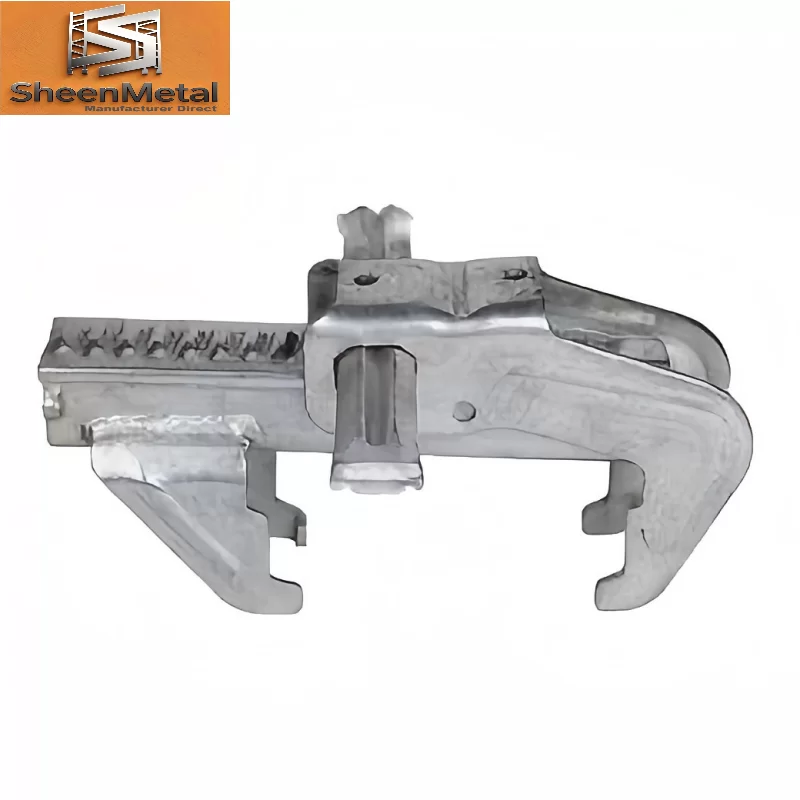
Not all joints are created equal. A comprehensive scaffold coupler Factory offers a diverse product line to accommodate various structural needs. Right-angle couplers are the most common, used to connect tubes at 90 degrees, while swivel couplers allow for adjustable angles, which are essential for bracing and complex geometries. Additionally, sleeve couplers are used for joining two tubes end-to-end to extend the length of a run. Each type requires specific engineering tolerances to prevent loosening during the vibration of a busy construction site.
Comparing Coupler Materials and Finishes
The longevity of a coupler is largely determined by its surface treatment. A professional scaffold coupler Factory typically offers several finishing options depending on the project environment. For instance, Hot-Dip Galvanizing (HDG) is the gold standard for outdoor projects due to its superior corrosion resistance. In contrast, electro-galvanizing is often used for indoor applications where cost is a factor but extreme weather protection is not required. The table below compares these common industry standards.
Manufacturing Capacity of a Modern Scaffold Coupler Factory
Scaling production without sacrificing quality is the hallmark of a world-class scaffold coupler Factory. Modern facilities utilize automated CNC machines to ensure every bolt and nut is threaded with precision. This automation reduces human error and increases the consistency of the clamping force. Furthermore, an integrated supply chain allows factories to source high-grade steel directly, reducing lead times for large-scale international projects. For global distributors, the ability to handle bulk orders while maintaining a strict QA (Quality Assurance) protocol is the most critical factor in partnership longevity.
Product Specifications and Technical Requirements
When reviewing technical data from a scaffold coupler Factory, it is important to look beyond the price. Specifications should include the slip load, the torque required for tightening, and the material grade. For example, a standard right-angle coupler must maintain a specific load capacity without sliding on a 48.3mm tube. Below is a typical specification table for professional-grade couplers.
Conclusion: Strengthening Your Project with a Trusted Partner
Selecting a high-quality scaffold coupler Factory is an investment in safety and efficiency. From adhering to international EN/BS standards to utilizing advanced galvanization techniques, the right manufacturer ensures that your scaffolding remains stable under the toughest conditions. By focusing on material quality, precise engineering, and transparent certification, you can reduce on-site risks and extend the lifecycle of your equipment. Choose a partner that values precision as much as you value safety.
Frequently Asked Questions (FAQs)
How do I verify the quality of a scaffold coupler factory?
Verifying a factory requires a multi-step approach. First, request official certifications such as ISO 9001 for quality management and specific product certifications like EN74 or BS1139. Second, ask for Material Test Reports (MTRs) to ensure the steel grade meets the required strength. Third, if possible, request samples for independent laboratory testing to verify the slip load and galvanization thickness. A transparent factory will always provide these documents willingly as they are proud of their compliance with safety regulations.
What is the difference between a right-angle and a swivel coupler?
A right-angle coupler (or double coupler) is designed to connect two tubes at a fixed 90-degree angle, providing maximum stability for the main framework of the scaffold. A swivel coupler, however, has one blade that can rotate 360 degrees. This allows the tubes to be connected at any angle, which is indispensable for creating diagonal bracing or adapting the scaffold to irregular building shapes. Both are essential, but they serve completely different structural purposes.
Why is hot-dip galvanizing preferred over electro-galvanizing?
Hot-dip galvanizing involves immersing the coupler in molten zinc, creating a thick, durable alloy layer that bonds chemically with the steel. This provides far superior protection against rust and corrosion, especially in salty or humid air. Electro-galvanizing uses an electric current to apply a much thinner layer of zinc. While it looks smoother and is cheaper, it wears away quickly when exposed to the elements. For any project involving outdoor exposure, hot-dip galvanizing is the only choice to ensure long-term structural integrity.
Can I customize coupler specifications at your factory?
Most professional factories, including those like Sheen Metal Scaffold, offer OEM and customization services. This can include adjusting the material grade for extreme environments, choosing specific surface finishes (such as powder coating in a company's brand color), or adjusting the dimensions to fit non-standard tube sizes. Customization is typically available for bulk orders and requires a detailed technical drawing to ensure the final product meets all safety and engineering requirements.